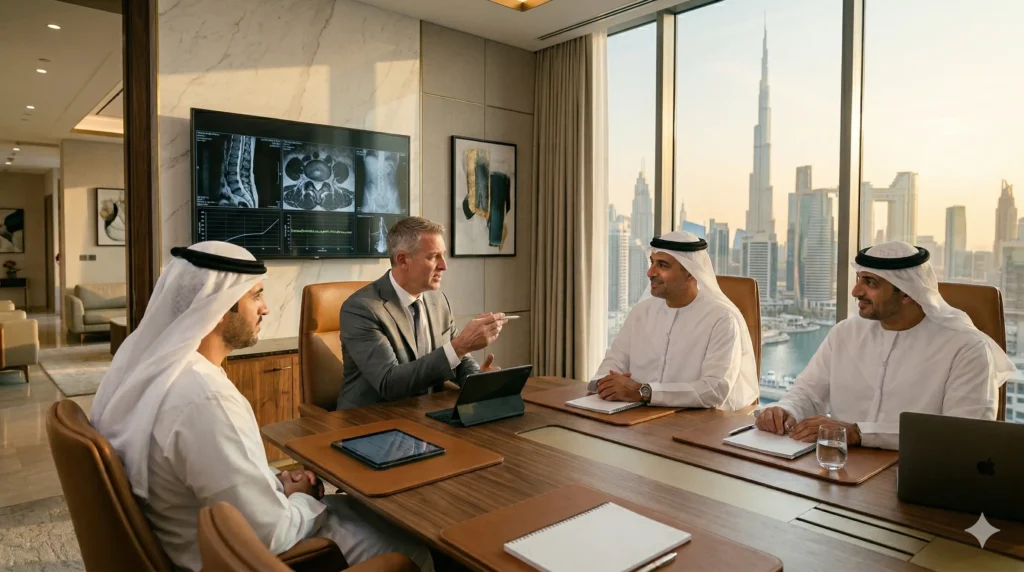

The Evolution of GCC Medical Leadership Recruitment: Securing Elite Western Talent
The healthcare landscape across the Gulf Cooperation Council (GCC) is undergoing a profound transformation. As Saudi Arabia’s Vision 2030 and the UAE’s Centennial 2071 drive the expansion of world-class medical infrastructure, the necessity for sophisticated GCC medical leadership recruitment has never been more acute. For Royal Households, private equity-backed hospital groups, and UHNW family offices, the priority is no longer just staffing; it is the acquisition of transformative leadership.
The Global Benchmarking of Excellence
In the current market, elite healthcare providers in Dubai, Riyadh, and Abu Dhabi are strictly targeting Western-trained professionals. These candidates—often sourced from the UK’s leading teaching hospitals or prestigious North American institutions—bring more than clinical expertise. They bring a culture of clinical governance and patient safety that is foundational to international accreditation.
When we facilitate executive search for C-Suite roles, such as Chief Medical Officers (CMOs) or Clinical Directors, the pedigree of the candidate is non-negotiable. Professionals holding a Certificate of Completion of Training (CCT) and registered with the General Medical Council (GMC) remain the gold standard for institutions seeking to bridge the gap between regional operations and global excellence.
Compensation Dynamics in Pounds Sterling (£)
Despite the local currencies being pegged to the US Dollar, many Western-trained consultants and executives evaluate opportunities through the lens of their home economy. At the elite level, tax-free packages are structured to compete directly with private practice earnings in London’s Harley Street or specialized US clinics.
Current benchmarks for Western-trained Consultant Physicians in the UAE and KSA typically range from £15,000 to £25,000 per month (tax-free), depending on the specialty and the complexity of the facility. For leadership roles, these figures can escalate significantly, often supplemented by performance-based bonuses, premium housing allowances, and comprehensive family educational support. Understanding these nuances is critical, which is why we maintain an updated salary guide to ensure both clients and candidates are aligned with real-time market shifts.
Navigating the Regulatory Framework
The administrative hurdles of cross-border recruitment remain a significant barrier for many. However, for the elite tier, the process is streamlined through experience. In Dubai, the Dubai Health Authority (DHA) has refined its digital pathways for specialist licensing, while the Saudi Commission for Health Specialties (SCFHS) has introduced expedited tracks for consultants entering the Kingdom’s “Giga-projects.”
Successfully navigating medical licensing requirements is a prerequisite for any leadership transition. A delay in credentialing not only stalls clinical operations but can also impact the strategic momentum of a new facility launch. Our role is to provide the clinical precision required to ensure these transitions are seamless, discreet, and efficient.
Strategic Retention: Beyond the Tax-Free Salary
While the financial allure of the GCC is undeniable, the retention of Western-trained talent requires a strategic approach to professional fulfillment. Elite Western consultants are increasingly looking for “legacy” roles—opportunities where they can build departments, implement research programs, or lead digital health initiatives.
In the highly competitive corridors of Riyadh and Abu Dhabi, the differentiator for an employer is often the quality of the “clinical environment.” High-end private hospitals that empower their CMOs to enforce strict clinical protocols and invest in the latest robotic surgical platforms find it significantly easier to retain the best minds. This cultural alignment is a core focus of our executive medical search methodology.
The Rise of Private Equity in GCC Healthcare
We are witnessing a surge in private equity investment within the region’s specialist sectors, including oncology, fertility, and regenerative medicine. These investors demand a specific type of medical leader: one who understands the intersection of clinical outcomes and commercial viability. This has created a new niche in GCC medical leadership recruitment for “Physician-Executives” who can navigate the complexities of a rapidly privatizing market while maintaining the highest ethical standards.
Conclusion
The race for Western-trained medical talent in the GCC is no longer a volume game; it is a precision exercise. Whether it is a Consultant Surgeon relocating from a London teaching hospital to a private facility in Dubai, or a CMO taking the helm of a new hospital in NEOM, the stakes are exceptionally high. For the institutions that successfully secure these leaders, the reward is a reputation for excellence that resonates globally.
See also: GCC Physician Leadership & Executive Search: The 2026 Guide
Contact Us for a confidential discussion on securing your next elite hire or role.