
The landscape of healthcare in the Middle East is rapidly evolving, driving an unprecedented demand for world-class medical expertise.
For private clinics, ultra-luxury medical facilities, and Royal Households, the priority is clear: securing exclusively Western candidates who bring unparalleled experience and prestige. However, executing successful Western-trained medical recruitment Gulf is a complex endeavor that requires navigating significant talent bottlenecks and stringent regulatory landscapes.
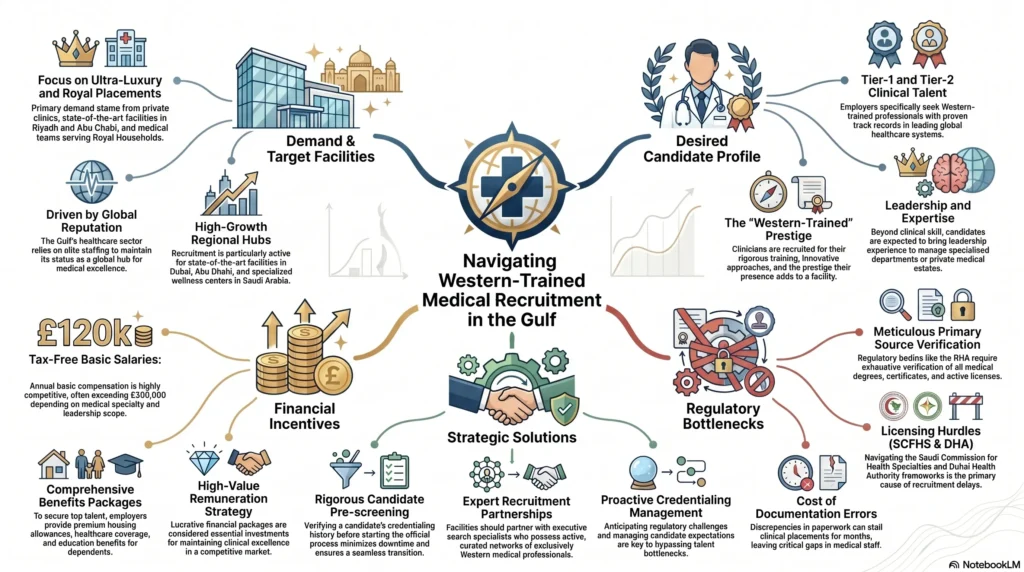
The Demand for Elite Clinical Staffing Middle East
The region’s healthcare sector is built on a foundation of excellence, relying heavily on elite clinical staffing Middle East to maintain its global reputation.
Whether staffing a state-of-the-art facility in Riyadh or a specialized luxury wellness center in Abu Dhabi, top-tier employers focus strictly on recruiting Western professionals.
These clinicians are highly sought after for their rigorous training, innovative clinical approaches, and proven track records in leading global healthcare systems.
Financial Incentives and Competitive Packages
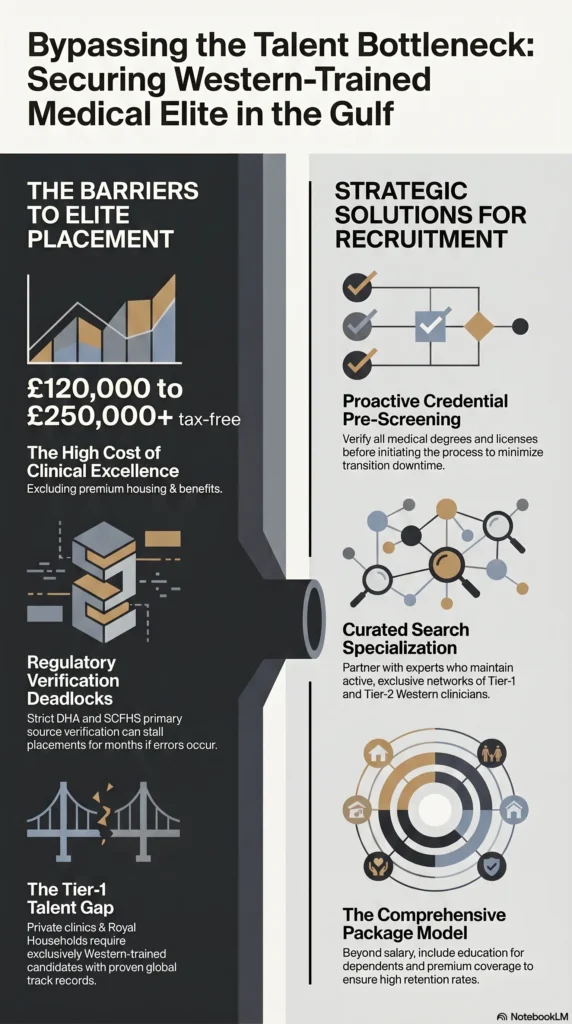
To attract Tier-1 healthcare talent Dubai and across the broader Gulf region, employers must offer highly competitive remuneration that reflects the caliber of the candidates. Top-tier clinical professionals expect exceptional compensation, with basic tax-free salaries frequently ranging from £120,000 to over £250,000 annually, depending on the medical specialty and leadership responsibilities.
When factoring in premium housing allowances, education benefits for dependents, and comprehensive healthcare coverage, the financial commitment required to secure these Western professionals is substantial but essential for maintaining clinical excellence.
Navigating the Licensing and Credentialing Maze
The primary bottleneck in securing these top-tier professionals lies in the rigorous regional regulatory frameworks. The DHA credentialing process in Dubai, for instance, requires meticulous primary source verification of all medical degrees, training certificates, and active licenses.
Any delay, discrepancy, or error in documentation can stall a placement for months, leaving critical clinical gaps unfilled. Similarly, securing SCFHS licensing Saudi Arabia demands a comprehensive understanding of the Saudi Commission for Health Specialties’ exacting criteria.
For elite employers and executive search firms, ensuring candidates strictly meet these standards before initiating the process is crucial. Pre-screening candidates to ensure flawless credentialing history minimizes downtime and guarantees a seamless transition from their home country to the Gulf.
Partnering with Recruitment Experts
Overcoming these hurdles requires a highly strategic approach to talent acquisition. Facilities must partner with search specialists who intimately understand the nuances of this specific market and possess an active, curated network of exclusively Western medical professionals.
By anticipating credentialing challenges, managing expectations, and structuring compelling, high-value packages, healthcare organizations can successfully bypass the talent bottleneck. For further insights on identifying and securing the world’s most capable medical professionals for your facility, visit Medical Staff Talent directly to explore tailored recruitment solutions.