
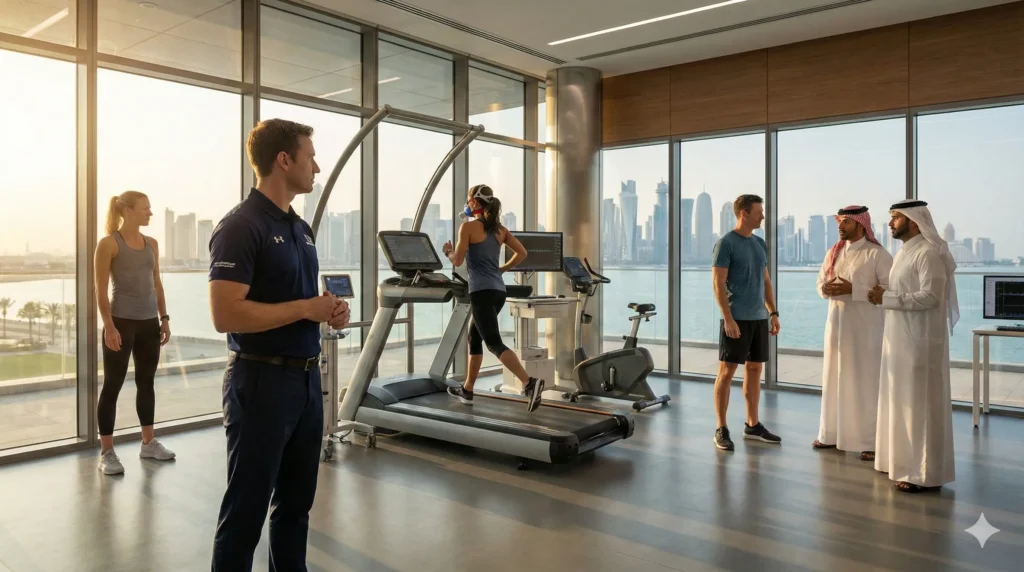
Elite Sports Medicine Careers in the GCC are no longer a niche opportunity defined only by event coverage or injury recovery. In 2026, the Gulf is building more permanent high-performance ecosystems where sports medicine, rehabilitation, diagnostics, and athlete optimisation work as one integrated model.
For Western-trained consultants, Elite Sports Medicine Careers in the GCC now represent a more serious long-term platform for specialist growth, multidisciplinary leadership, and premium athlete care. Elite Sports Medicine Careers in the GCC are increasingly shaped by return-to-play judgment, performance governance, and the ability to work inside elite environments where confidentiality, credibility, and institutional reputation all matter at the same time.
Why Elite Sports Medicine Careers in the GCC Are Expanding in 2026
One reason Elite Sports Medicine Careers in the GCC deserve more attention is that regional investment is no longer limited to hosting global sporting events. The market is maturing. Employers are building systems, not just showcasing facilities. That means more credible demand for physicians who can connect diagnostics, rehabilitation, prevention, athlete monitoring, and clinical leadership inside one performance structure.
This shift is especially relevant for doctors moving from the UK, Ireland, the United States, Canada, Australia, or leading European systems. In practical terms, Elite Sports Medicine Careers in the GCC are becoming more attractive because the region is building genuine performance environments rather than isolated sports roles with limited strategic value.
Qatar continues to hold unusual weight in this field because it offers a visible specialist sports medicine platform through Aspetar and its clinical sports medicine research platform. For consultants assessing the Gulf, that matters because markets with serious specialist infrastructure usually produce clearer role design, stronger peer environments, and better alignment between title and daily clinical reality.
Saudi Arabia is also becoming more important in the 2026 outlook because sport, physical wellbeing, and performance infrastructure now sit closer to national transformation than to short-term prestige. The direction of travel is visible in Vision 2030 and the Quality of Life Program. As a result, Elite Sports Medicine Careers in the GCC increasingly appeal not only because of remuneration, but because they offer the chance to help shape systems from within.
Why Elite Sports Medicine Careers in the GCC Demand Licensing Precision
In this market, the interview is not the real gate. The file is.
Dubai, Abu Dhabi, Saudi Arabia, and Qatar all require a clean regulatory pathway, and that changes the conversation early. A strong CV may open the door, but title alignment, specialist evidence, good standing, professional classification, and licensing readiness decide whether the opportunity can move forward without friction.
Dubai’s DHA registration pathway makes clear that professionals must meet the requirements for the applied category, title, and specialty. Abu Dhabi’s Department of Health PQR framework continues to shape eligibility standards. In Saudi Arabia, SCFHS classification and registration remain central. In Qatar, the DHP Registration and Licensing Section regulates the professional pathway.
That is why Elite Sports Medicine Careers in the GCC should always be assessed through licensing readiness, title alignment, and specialist credibility before interview stage. Candidates who approach the region seriously tend to win faster because they understand that premium hiring becomes fragile very quickly when the regulatory file is weak.
This is also why related internal pages such as GCC Licensing Strategy for Tier-1 Consultants, Medical Licensing in the GCC for Tier-1 Physicians, and Credentialing and Privileging GCC: 4 Critical Rules for Elite Hiring support this article naturally and strengthen the wider topical cluster.
Why Elite Sports Medicine Careers in the GCC Attract Western-Trained Consultants
For UK-trained doctors, consultant-level credibility still carries more weight when specialist status is clear and easy to defend. The same principle applies to other Western-trained profiles with recognised board certification or equivalent specialist formation. In premium Gulf hiring, employers are not only asking whether a candidate is clinically strong. They are asking whether the title, background, and regulatory profile hold together under scrutiny.
For British-trained consultants, the GMC Specialist Register remains an important trust signal. In sports medicine, where prestige alone is not enough, employers usually want a file that reads clearly before the interview becomes a serious commercial conversation.
That is one reason Elite Sports Medicine Careers in the GCC continue to attract Western-trained consultants who value title integrity, specialist clarity, and credible institutional positioning.
How Elite Sports Medicine Careers in the GCC Are Shaped by Multidisciplinary Teams
A modern sports medicine physician in the Gulf is rarely being hired to work in isolation. The most attractive mandates tend to involve coordination with physiotherapy, strength and conditioning, sports science, imaging, nutrition, rehabilitation, and performance management.
In the most advanced settings, Elite Sports Medicine Careers in the GCC are defined not only by clinical skill, but by the ability to lead integrated performance teams. For many senior consultants, that is one of the most attractive parts of the region. The real opportunity is not only to treat athletes. It is to influence the design of the whole performance pathway around them.
This multidisciplinary model is one reason Aspetar’s sports medicine journal remains relevant to anyone mapping where the field is going. The broader trend across the Gulf is clear: the more sophisticated the environment, the less isolated the physician role becomes.
Compensation Should Be Read as Total Reward, Not Only Salary
Sports medicine roles in the Gulf can sit at the premium end of specialist compensation, but experienced candidates should assess them through total reward rather than through one headline figure. Title, tax efficiency, accommodation, family relocation, travel expectations, reporting line, clinical scope, and reputational value all matter.
This is one reason Elite Sports Medicine Careers in the GCC should be evaluated strategically rather than emotionally. Two roles may carry similar titles, yet one may be narrow and operational while another may offer genuine authority across medical standards, performance integration, and long-term service-line development.
For wider package context, GCC Physician Salary Trends: 2026 Executive Report is a useful internal companion piece.
Discretion and Cultural Intelligence Still Matter
The technical side of the role matters, but it is not the whole role. In elite Gulf environments, consultants are also assessed on discretion, communication style, and cultural intelligence. This becomes even more important when the role touches federations, high-profile athletes, private principals, or family office structures where confidentiality is non-negotiable.
That is where many strong clinicians underestimate the market. The employer is not only asking whether the doctor can diagnose, treat, and advise. The employer is also asking whether the doctor can operate calmly inside a protected environment where trust must be earned and preserved over time.
That is why The Hidden Credential: Why Cultural Intelligence Define Elite Clinical Success in the Gulf fits naturally inside this article’s internal linking structure.
Where Medical Staff Talent Fits in This Market
At Medical Staff Talent, we do not read sports medicine hiring as a generic vacancy exercise. We read it as a platform-design question. For private hospitals, private clinics, Royal Households, and UHNW family structures across Dubai, Abu Dhabi, Riyadh, and Doha, the real challenge is not simply finding a Western-trained doctor with sports exposure.
The real challenge is identifying a clinician whose title, licensing pathway, specialist evidence, discretion, and multidisciplinary fit can all hold under scrutiny from day one. That standards-first logic is the same logic behind our wider work in Orthopedic Specialist Recruitment in the GCC: Elite Standards, licensing strategy, and premium physician search across the region.
Conclusion: The Real Opportunity Behind Elite Sports Medicine Careers in the GCC
Elite Sports Medicine Careers in the GCC are becoming more credible because the region now offers more than money and more than visibility. It offers specialist infrastructure, better-capitalised performance environments, more integrated athlete-care models, and a clearer long-term platform for doctors who want serious professional upside.
For the right Western-trained consultant, Elite Sports Medicine Careers in the GCC can offer a rare combination of clinical prestige, performance innovation, and long-term strategic value. The best move is not simply the most glamorous one. It is the one where specialist status is clear, the licensing route is defensible, the multidisciplinary environment is real, and the employer has built a structure worthy of your level.
Elite Sports Medicine Careers in the GCC should be evaluated through platform quality, regulatory clarity, and long-term professional upside rather than headline prestige alone.
Incoming links
These existing posts should link into this article:
- Orthopedic Specialist Recruitment in the GCC: Elite Standards
- GCC Physician Salary Trends: 2026 Executive Report
- Medical Licensing in the GCC for Tier-1 Physicians
- GCC Licensing Strategy for Tier-1 Consultants
- Credentialing and Privileging GCC: 4 Critical Rules for Elite Hiring
- The Hidden Credential: Why Cultural Intelligence Define Elite Clinical Success in the Gulf
- Elite Medical Recruitment Doha: 7 Critical Shifts Driving Quiet-Luxury Hiring in 2026
- Navigating DHA Licensing for Tier-1 Physicians in Dubai