The problem is not capability. It’s latency.
Integrating a Western-trained ICU on-call Gulf system can address these critical points effectively.
Implementing a comprehensive Western-trained ICU on-call Gulf strategy not only addresses immediate concerns but also sets the groundwork for future medical preparedness.
A dedicated Western-trained ICU on-call Gulf team ensures that every medical incident is addressed with the utmost urgency and expertise.
Only with a Western-trained ICU on-call Gulf presence can households ensure timely responses to potential medical emergencies.
Engaging a Western-trained ICU on-call Gulf team can significantly enhance response times and decision-making capabilities.
These challenges highlight the necessity of a reliable Western-trained ICU on-call Gulf system that can adapt to the unique needs of UHNW households.
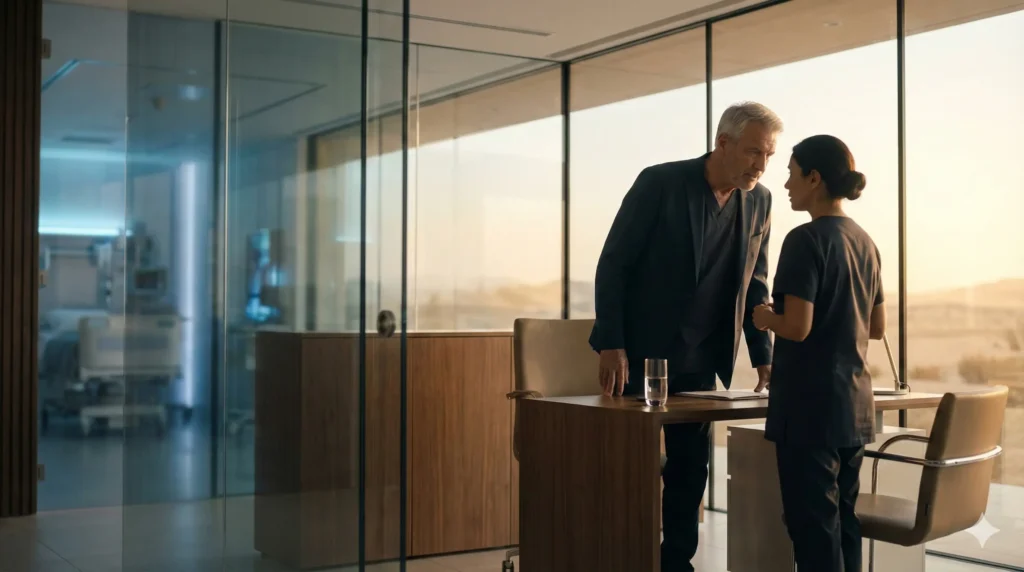
In UHNW estates, a “medical incident” rarely begins as a dramatic collapse. It begins as a soft signal: a subtle respiratory change at 02:10, an unexplained tachycardia after a flight, a confused moment that feels “off” to an experienced nurse. The household that wins is not the one with the most impressive CVs on paper—it’s the one with the shortest time from signal to the right decision.
Most UHNW setups in Dubai, Abu Dhabi, Riyadh, and Doha break at three points:
Signal detection is strong (a good private nurse spots deterioration), but
Decision authority is unclear (who can escalate, override, or transfer?), and
Hospital interface is improvised (no pre-agreed receiving pathway, privileging clarity, or documentation discipline).
Delays can be mitigated effectively through the integration of a Western-trained ICU on-call Gulf framework that streamlines the medical response process.
The proven success of the Western-trained ICU on-call Gulf model has transformed the way critical care is delivered in elite households.
A two-layer system managed by a Western-trained ICU on-call Gulf expert establishes a robust safety net for patients.
The result is avoidable delay—then a noisy, high-visibility emergency.
The role of a Western-trained ICU on-call Gulf practitioner extends beyond immediate care, ensuring ongoing patient safety.
Incorporating Western-trained ICU on-call Gulf professionals into the team guarantees a high level of medical governance.
The Western-trained ICU on-call model that actually works
The optimal structure is a two-layer architecture, with a defined hospital spine.
Layer 1: Household clinician as early-warning system
This is typically a Western-trained senior nurse (acute/ICU/HDU background) or an experienced paramedic/advanced practitioner where permitted. Their function is not “comfort care”; it is continuous risk sensing:
With Western-trained ICU on-call Gulf experts on retainer, households can expect quicker and more decisive medical interventions.
The integration of a Western-trained ICU on-call Gulf strategy is vital for effective management of complex medical situations.
The Importance of a Western-trained ICU on-call Gulf
baseline tracking (vitals, oxygenation, medication adherence, post-procedure recovery)
structured triggers (NEWS2-style logic adapted to the household)
disciplined handover (SBAR that can be read in 30 seconds)
Layer 2: ICU decision authority on retainer
This is where many UHNW households go wrong: they hire an impressive GP and assume it covers critical risk. It doesn’t.
When the principal’s risk profile includes cardiometabolic disease, respiratory vulnerability, anticoagulation, complex polypharmacy, or frequent aviation, you need an ICU-grade decision-maker available fast. The Western-trained ICU consultant (or dual-trained ICU/anaesthesia or ICU/EM depending on jurisdiction) provides:
threshold decisions (observe vs intervene vs transfer)
pre-hospital stabilisation direction (oxygen escalation, fluids, vasoactive considerations, airway planning)
hospital navigation (who to call, where to send, what to pre-alert)
documentation discipline that protects clinician and household
This is not about “being on site.” It’s about compressing time-to-correct-decision.
A robust Western-trained ICU on-call Gulf framework helps to clarify roles and responsibilities in a medical emergency.
The hospital spine: one primary, one contingency
Elite households quietly standardise two receiving options per city:
a primary private hospital with ICU capability and VIP handling that does not corrupt clinical process
a contingency hospital for surge capacity, sub-specialty access, or politics/logistics
Without this, escalation becomes negotiation under stress.
Candidate selection: the decision logic (not the CV theatre)
“Western-trained” is a standard of training and governance, not nationality. In this context, the hire is in scope when the clinician’s pathway matches Tier-1/Tier-2 Western-trained regulatory expectations (e.g., UK CCT/CESR equivalence, ABMS/ACGME board pathways, and aligned specialist training standards).
Use this decision logic:
If the household has complex chronic risk + travel + VIP constraints → prioritise ICU/anaesthesia/EM seniority with proven escalation leadership.
If the household is mainly preventive/longevity with low acute risk → a strong internal medicine/family medicine lead may suffice, with ICU on-call as backstop.
If the household expects “no-hospital bias” → treat that as a governance risk that must be engineered out via pre-agreed thresholds and receiving pathways (not negotiated during deterioration).
Interviewing should be scenario-based, not conversational. Run three short simulations:
silent hypoxia post-flight
sepsis-risk post-procedure at home
acute delirium with family pressure to “avoid hospital”
You are testing judgement under hierarchy, not knowledge.
Failure modes you should assume will happen
“Discretion” used as a reason to avoid governance
Some households demand minimal documentation. That is how clinicians get exposed, and how patterns are missed. Real discretion is controlled access, not absence of record.
Single-point-of-failure staffing
One superstar doctor becomes the entire system. This creates fragility (illness, resignation, travel overlap) and accelerates burnout. Stability requires repeatable coverage, not heroics.
Vague authority during conflict
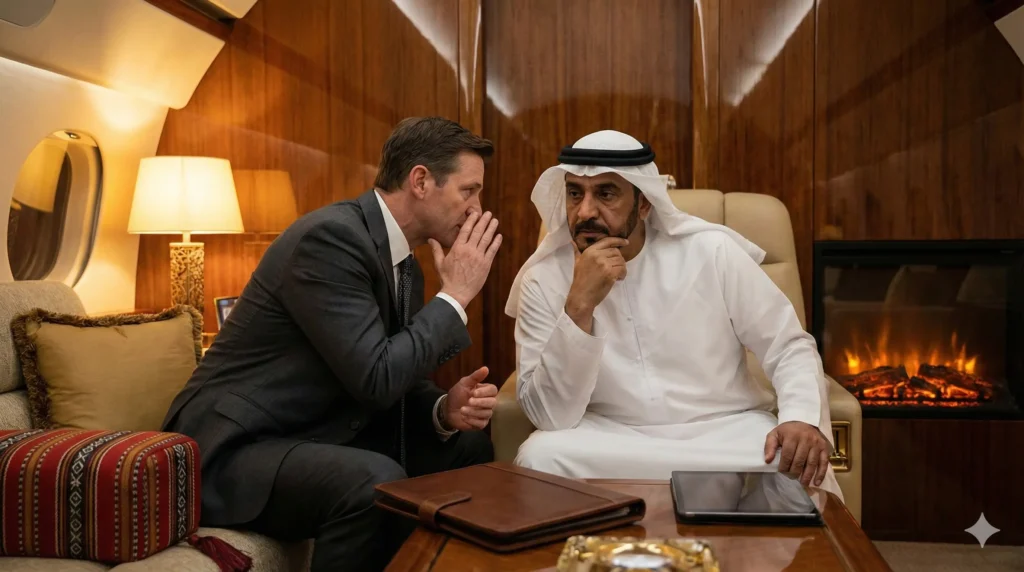
In a VIP moment, multiple stakeholders appear—family office, security lead, senior relative, driver, assistant. If escalation authority isn’t pre-defined, the nurse hesitates and the doctor negotiates. Time disappears.
Retention fails when elite clinicians repeatedly face indefensible ambiguity. The fix is structural: leadership, onboarding, and boundaries engineered into the operating model (see: Beyond the CV: Structuring Elite Medical Teams in the Gulf.)
With the right Western-trained ICU on-call Gulf resources in place, households are better prepared for any medical incident.
Licensing, verification, and privileging: build the “clean corridor”
Elite households often underestimate how licensing friction silently destroys readiness. A clinician who is “on paper hired” but not fully verified, registered, and privilege-aligned is not a clinical asset; they are a liability.
Start with the regulator standards and align the pathway across UAE and KSA workflows:
UAE qualification baseline and role expectations are anchored by the unified framework (see: Introduction to Professional Qualification Requirement (PQR) | Department of Health Abu Dhabi).
Saudi registration/classification has its own logic and timelines via Mumaris+ (see: Mumaris FAQ | Saudi Commission for Health Specialties).
Primary Source Verification remains a core dependency across regulators and employers (see: DataFlow Group – Primary Source Verification).
Operationally, run licensing like a clinical process: single source of truth CV, consistent dates/titles, and a verification-ready document pack. For the internal workflow model, use: DataFlow and PSV for Gulf Licensing: A Clear Workflow for Western-Trained Clinicians.
The quiet standard
UHNW medical coverage is not a “doctor in the house” story. It is an escalation architecture: early warning, clear authority, clean licensing, and a pre-agreed hospital spine. When those are in place, emergencies become controlled transfers instead of reputational events—and Western-trained clinicians stay because the system protects their judgement and licence.
The significance of a Western-trained ICU on-call Gulf solution cannot be overstated in ensuring top-tier medical readiness.
Establishing a Western-trained ICU on-call Gulf protocol can prevent critical errors and enhance patient safety.
For a direct, discreet channel: Contact Us
Western-trained ICU on-call Gulf
Ultimately, a well-structured Western-trained ICU on-call Gulf system can significantly enhance the quality of care provided.