

Recruiting top-tier Western medical professionals for Gulf facilities demands precision. The healthcare landscape across the GCC is expanding at an unprecedented rate, and with it, the demand for clinical excellence. However, learning how private healthcare employers mitigate licensing delays and secure elite clinical talent for Dubai, Abu Dhabi, and Riyadh without compromising patient care or revenue is the key to maintaining a competitive edge.
The High Demand for Tier-1 Medical Professionals
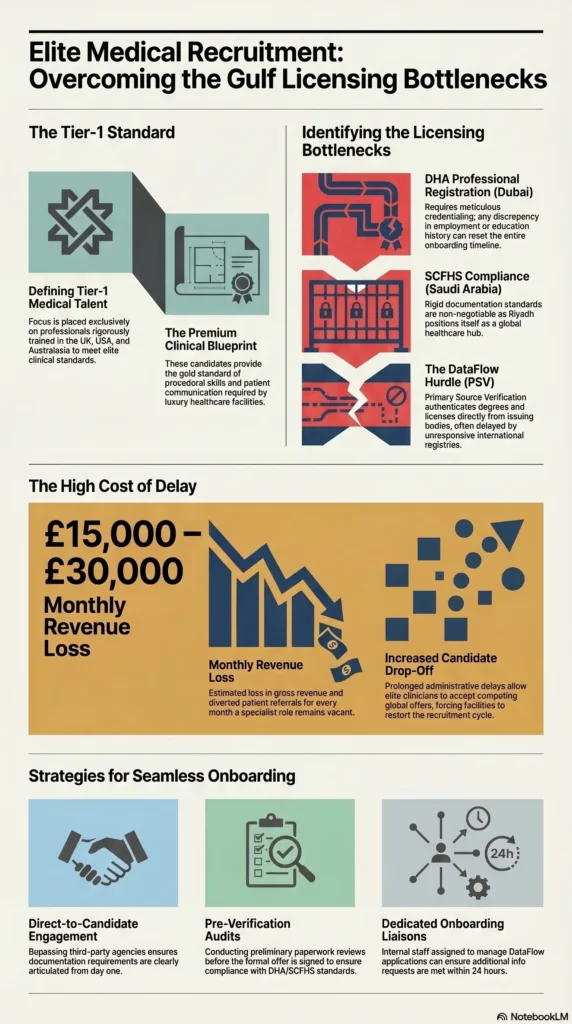
The blueprint for premium healthcare delivery in the Gulf relies heavily on sourcing the right expertise. Private healthcare employers in Dubai and executive medical talent in Riyadh are intensely focused on securing Tier-1 medical professionals—specifically those rigorously trained in the UK, USA, and Australia.
These candidates bring a gold standard of clinical practice, advanced procedural skills, and a level of patient communication that luxury and elite clinics demand. However, identifying these candidates is only the first step. The true challenge for direct employers lies in navigating the complex bureaucratic frameworks required to bring them on board.
Understanding the Licensing Bottlenecks
The primary hurdle in Western-trained healthcare recruitment in the Gulf is the transition from a signed contract to active clinical practice. Regulatory bodies rightly maintain strict standards to protect patient safety, but the administrative processes can cause significant hiring friction.
DHA Licensing Process and SCFHS Compliance
Whether a facility is expanding its surgical wing in Dubai or bringing a renowned specialist to Saudi Arabia, candidates must navigate strict regulatory environments.
-
The DHA Licensing Process: Essential for practicing in Dubai, the Dubai Health Authority (DHA) professional registration requires meticulous credentialing. Any discrepancy in employment history or educational verification can reset the timeline.
-
SCFHS Compliance: The Saudi Commission for Health Specialties demands rigorous documentation. As Riyadh positions itself as a global healthcare hub, strict adherence to these compliance standards is non-negotiable.
The Role of Primary Source Verification
A critical stage in both processes is Primary Source Verification (PSV). Platforms like DataFlow are mandatory for authenticating a candidate’s degrees, medical licenses, and certificates of good standing directly from the issuing bodies. Delays here are common, often stemming from unresponsive university registries or former employers in the candidate’s home country.
The Financial Cost of Recruitment Delays
In the high-stakes environment of Gulf healthcare, time is quite literally money. Leaving a specialist or executive medical role vacant due to licensing bottlenecks has a severe financial impact. Depending on the specialty, a delayed onboarding process can cost a private clinic upwards of £15,000 to £30,000 per month in lost gross revenue and diverted patient referrals.
Furthermore, prolonged administrative delays increase the risk of candidate drop-off. Elite clinicians are highly sought after globally; if the DHA or SCFHS compliance process stalls indefinitely, they may accept competing offers, forcing the facility to restart the recruitment cycle from scratch.
Strategies for Private Healthcare Employers
To overcome these bottlenecks, direct employers must adopt a proactive, streamlined approach to clinical hiring:
-
Direct-to-Candidate Engagement: By bypassing traditional third-party agencies and utilizing a strategic executive recruitment model, facilities can communicate directly with candidates. This ensures that documentation requirements are clearly articulated from day one, reducing miscommunication and delays.
-
Pre-Verification Audits: Before a formal offer is signed, direct employers should conduct a preliminary audit of the candidate’s paperwork to ensure it meets the stringent requirements of the DHA or SCFHS.
-
Dedicated Onboarding Liaisons: Assigning internal staff specifically to manage the DataFlow and licensing applications ensures that any requests for additional information are handled within 24 hours, keeping the application moving smoothly.
Conclusion
Mastering Western-trained healthcare recruitment in the Gulf is not just about finding the right talent; it is about executing a flawless onboarding strategy. By understanding the intricacies of the DHA licensing process, anticipating the demands of SCFHS compliance, and focusing on a direct employer approach, private clinics can eliminate costly bottlenecks and consistently deliver world-class care.
Ready to Secure Elite Medical Talent?
Delays in credentialing and licensing should never compromise the standard of care at your facility. At Medical Staff Talent, we bridge the gap between the world’s finest clinical professionals and the Gulf’s premier healthcare providers. Partner with us today to streamline your recruitment process and secure fully verified, Tier-1 Western-trained doctors, nurses, and physiotherapists.