
By David Vilchez, Founder & CEO, Medical Staff Talent
→ Sports Physiotherapist (Manual & Movement Therapy) — Private Family, Dubai
Many private families in the Gulf choose to have planned surgery abroad. A principal may have a shoulder repaired in London, a hip replaced in Munich or a spinal procedure in New York, and then fly home to recover. The operation takes a few hours. The recovery takes months, and most of it happens far from the surgeon who performed it.
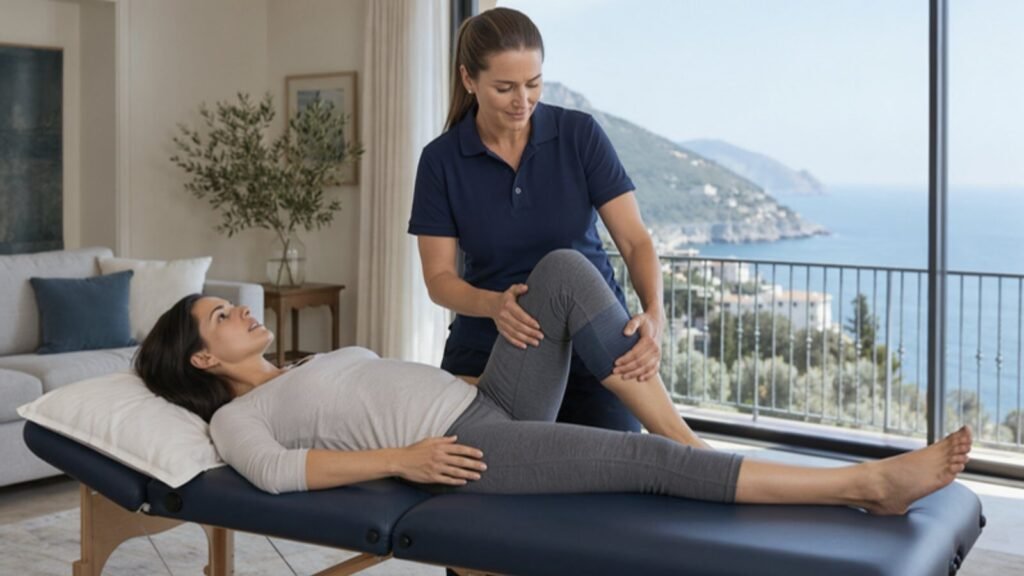
That gap is where a family’s physiotherapist becomes essential. The surgeon sets the plan and the limits. The family’s doctor oversees the person’s overall health. The physiotherapist is the one who is there every day, turning the plan into practice, noticing early when something is not right, and keeping everyone informed.
This article is for sports and manual therapy physiotherapists considering a live-in role with a private family in Saudi Arabia, the United Arab Emirates or Qatar. It explains how a post-operative physiotherapist working privately supports a family member before and after surgery abroad: prehabilitation, the first weeks home, travel after the operation, and how to report back to a surgeon in another country.
Surgery abroad, recovery at home
Families travel for surgery for many reasons: a surgeon they trust, a second opinion, privacy, or simply a long relationship with a particular hospital. Whatever the reason, the pattern is similar. The operation and the first days of care happen abroad. The weeks and months that follow happen at home, in a residence or while travelling with the family.
In a hospital setting, post-operative rehabilitation usually involves a team that sees the patient regularly and shares notes within one system. With a private family, that team is spread across countries and time zones. The surgeon may review the patient at set points, often remotely. The family’s doctor may be local. The physiotherapist is the constant.
This is why families value a clinician who understands post-operative care, communicates clearly and knows exactly where their role begins and ends. You are not replacing the surgeon’s judgement. You are making sure it is followed well, day after day.
Before the operation
Prehabilitation
When surgery is planned in advance, there is often time to prepare. Depending on what the surgeon recommends, that might mean maintaining strength and mobility around the affected area, working on general conditioning, practising the exercises the person will need afterwards, and setting up the residence so the first days home are safe and simple.
Prehabilitation also gives you time to build a relationship with the principal before they are in pain and less mobile. They learn how you work. You learn how they respond to advice, what motivates them and what worries them about the operation.
Agreeing the plan and the reporting line
Before the family travels, it is worth agreeing a few things clearly, ideally in writing and always through the channels the family chooses:
- who leads the post-operative plan (the surgeon) and who oversees the person’s general health (the family’s doctor);
- what the surgeon expects from physiotherapy at home, and when they want to review progress;
- how you will send updates, how often, and to whom;
- what should prompt an urgent call rather than a routine update.
The family’s office usually coordinates these conversations. Your part is to ask the right questions, take note of the answers and make sure nothing important is left vague. A short, agreed plan prevents most of the problems that arise when a team is spread across several countries.
The first weeks home
The surgeon sets the limits. This is the principle that guides everything in the early weeks. Restrictions on movement, weight-bearing, lifting, sleeping position or the use of a brace come from the surgical team, and they are followed precisely. If something in the protocol is unclear, you ask the surgeon’s team rather than interpreting it yourself.
Within those limits, your work is practical and attentive:
- guiding the exercises the surgeon has approved, at the pace they have set;
- helping the principal move safely around the residence and adapting the environment where needed;
- watching for signs that need medical attention, such as unexpected pain, swelling, wound concerns, fever or changes in sensation, and raising them promptly with the family’s doctor or the surgical team;
- supporting sleep, comfort and confidence, which often matter as much to the principal as the exercises themselves.
Recovery from surgery is rarely a straight line. Some days are better than others. A calm, consistent presence helps the principal accept that, follow the plan and avoid doing too much too soon, which is a common risk with people used to being active and in control.
Some recoveries include water-based rehabilitation once the surgeon allows it. If the residence has a pool, our article on hydrotherapy and pool rehabilitation with a private family looks at how that can work. For knee surgery followed by a return to sport, see our guide to returning to sport after a knee injury.
Travelling after surgery
Private families travel often, and a recovering principal may want to resume that rhythm quickly. When and how they travel after surgery is a medical decision. The surgeon or the family’s doctor gives the approval, and you follow it.
Once travel is approved, your role is to make it as safe and comfortable as possible. That can include planning movement and exercise during long journeys, managing seating and support on the plane or in the car, keeping to the exercise schedule across time zones, and making sure the next residence or hotel is ready for the principal’s current needs.
Because you will be travelling with the family, it helps to carry what you need to keep rehabilitation going wherever you are. Our article on the travelling physiotherapist’s portable clinic covers the kind of equipment that makes this possible. You may also travel with the family to the surgery itself or to follow-up appointments abroad, depending on what the family and the surgeon prefer.
Reporting back
Clear, discreet reporting keeps a spread-out team working as one. The detail depends on what was agreed before the operation, but good updates usually share the same qualities:
- Regular and predictable: sent at the agreed frequency, so nobody has to chase for information.
- Concise and factual: what was done, how the principal responded, any change in pain, swelling or function, and any concern.
- Clear about questions: anything that needs the surgeon’s or doctor’s decision is stated plainly, not buried in a long message.
- Discreet: shared only through the channel and with the people the family has approved.
Discretion matters throughout. A family’s medical information is private, and that includes the fact that a principal has had surgery at all. You sign the family’s NDA together with your contract with the family, and the reporting line agreed with the family’s office is the one you use.
A hypothetical case
Picture a sports physiotherapist working with a private family in Doha. The principal, a keen tennis player, is scheduled for shoulder surgery in London.
In the weeks before the operation, the physiotherapist works on the exercises the surgeon has suggested and helps prepare the residence: a chair that is easy to get out of, essentials within reach of the unaffected arm. With the family’s office, they agree how updates will reach the surgeon’s team and the family’s doctor.
The physiotherapist travels with the family to London. After the operation, the surgical team explains the restrictions and the exercises for the first phase. Back in Doha, the physiotherapist guides those exercises daily, adapts routines around the residence and sends a short weekly update through the agreed channel. When the principal reports a new type of pain one evening, the physiotherapist contacts the family’s doctor straight away rather than waiting for the weekly note.
Over the following months, the family travels between residences and abroad. The physiotherapist works six days a week, remains available when needed, and keeps the rehabilitation on track wherever the family is. Each new stage begins only when the surgeon approves it.
Who we look for
We introduce Western-Trained physiotherapists, trained in the UK, Europe, Australia, New Zealand, the United States or Canada, with a sports or manual therapy background. For families planning surgery abroad, these strengths stand out:
- experience with post-operative orthopaedic rehabilitation, for example shoulder, hip, knee or spine;
- confidence working within a surgeon’s protocol and asking for clarification when needed;
- clear, concise written communication;
- the ability to recognise when something needs medical attention, and to act promptly;
- calm, discreet manner with high-profile clients.
Post-operative work often sits alongside everyday care for the rest of the family. Our article on back and neck care for a busy principal shows what that wider role can look like. You can read more about the role on our physiotherapists page.
The role in brief
- Model: permanent, live-in and single-status; you relocate alone and travel with the family between residences and abroad.
- Schedule: six days a week, with availability 24/7.
- Package: from £60,000 a year gross, depending on experience, with accommodation, flights and medical insurance covered. Professional indemnity is not covered, so check your own cover before you go.
- Tax: the salary is agreed directly between the family and the clinician; each clinician should take advice from their own tax adviser on whether the income is taxable in their circumstances.
- Confidentiality: you sign the family’s NDA together with your contract with the family.
How an introduction works
Medical Staff Talent introduces and verifies clinicians. The engagement is contracted directly between the family and the clinician, and all local arrangements (visa, licensed entity, coordination with local clinics) remain with the family’s own office and advisers.
Frequently asked questions
Do I need post-operative orthopaedic experience?
It is a strong advantage. Families planning surgery look for physiotherapists who have guided patients through post-operative rehabilitation and are comfortable working within a surgeon’s protocol. A sports or manual therapy background combined with post-operative experience is a particularly good fit.
Who sets the rehabilitation limits?
The surgeon. Restrictions on movement, weight-bearing and activity come from the surgical team, and the family’s doctor oversees the person’s general health. Your role is to apply the plan carefully at home and ask the surgical team whenever something is unclear.
Will I travel to the surgery with the family?
Often, yes, because you travel with the family as part of the role. Whether you attend appointments abroad depends on what the family and the surgeon prefer. Either way, you continue the rehabilitation wherever the family is afterwards.
How do I report to a surgeon abroad?
Through the channel agreed before the operation, usually arranged by the family’s office. Updates should be regular, concise and factual, with any questions for the surgeon stated clearly. Anything urgent goes straight to the family’s doctor or the surgical team.
What is the salary?
From £60,000 a year gross, depending on experience, with accommodation, flights and medical insurance covered. Professional indemnity is not covered. The salary is agreed directly between the family and the clinician; each clinician should take advice from their own tax adviser on whether the income is taxable in their circumstances.
Send your CV in confidence
If you are a Western-Trained sports or manual therapy physiotherapist with post-operative experience, and you are ready for a live-in role with a private family in Saudi Arabia, the UAE or Qatar, send your CV in confidence.
Current opening: Sports Physiotherapist (Manual & Movement Therapy) — Private Family, Dubai
Send your CV in confidence