By David Vilchez, Founder & CEO, Medical Staff Talent
→ Sports Physiotherapist (Manual & Movement Therapy) — Private Family, Dubai
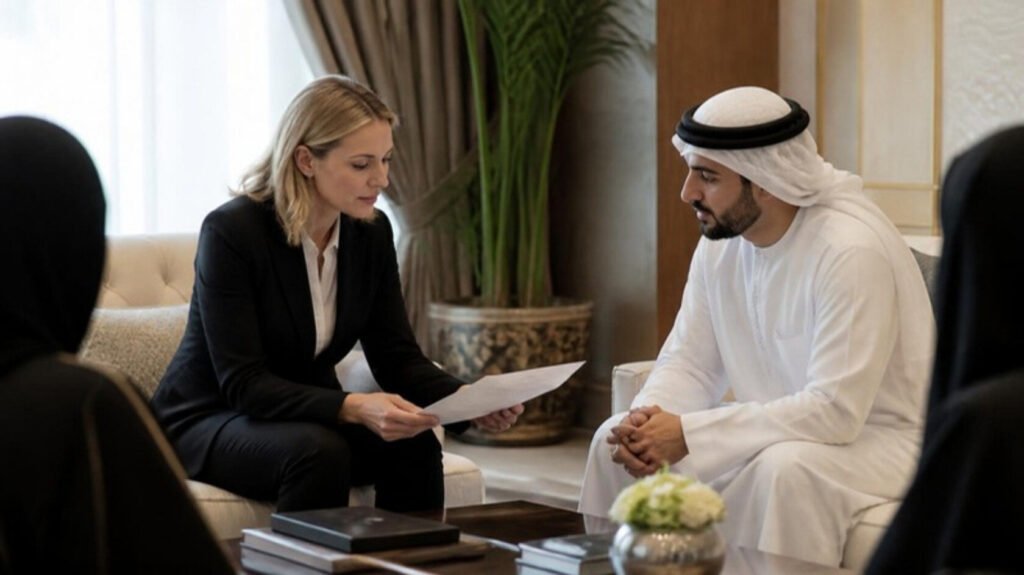
For many private families in Saudi Arabia, the UAE and Qatar, the hottest weeks of the year are spent away from the Gulf. Some head to a house in the Alps or a hotel in London; others spend part of the summer on a yacht, moving slowly between the harbours and anchorages of the Mediterranean. When they do, the household travels with them, and that often includes the family’s live-in sports physiotherapist.
The physiotherapist is not a member of the yacht’s crew. The role is a permanent, live-in position with the family, based in Saudi Arabia, the UAE or Qatar, and the clinician joins the yacht only when travelling with the family. When the family steps ashore and flies home, so does the physiotherapist. Medical Staff Talent introduces clinicians to private families; it does not place yacht crew.
What changes is the setting, not the work. The family’s routine continues on board: the principal still wants to train, a teenager still has a tennis tournament in the autumn, a grandparent still needs help staying mobile, and everyone wants to make the most of the water. This article looks at how a Western-Trained sports and manual therapy physiotherapist adapts to life at sea.
What changes on board
Even a large yacht is a compact world. Space that feels generous for a holiday becomes limited the moment you need somewhere quiet to treat, a floor long enough for a mobility session or a corner to store equipment.
Motion is the second change. At anchor in calm water, most days feel stable. Under way, or when the wind picks up, the deck moves, and exercises that are simple on land, such as single-leg balance, loaded lunges or anything with free weights, need rethinking or postponing.
Equipment is limited to what has been brought aboard or arranged in advance. Planning before departure matters.
Finally, privacy works differently. The yacht has its own crew, often a large one, living and working in close quarters, and guests may come and go. The physiotherapist shares this space with people who are not part of the family’s household and has to keep both the family’s privacy and the crew’s working rhythm in mind.
Treatment space and kit at sea
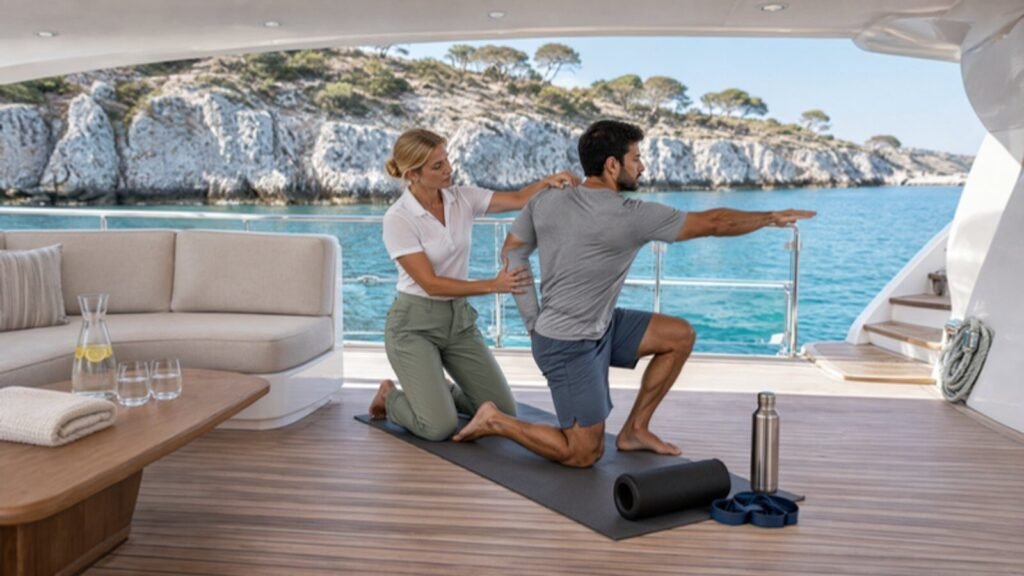
The first job, usually agreed with the family’s office before the trip, is to decide where treatment will happen. A guest cabin, a quiet corner of a lower deck, the gym if the yacht has one, or a shaded area of the aft deck at a set time of day can all work. What matters is that the space is private when it needs to be, stable enough to work safely and available at predictable times, so the crew can plan around it.
Kit needs to be compact and secure. A portable treatment couch, resistance bands, a few light weights, a foam roller, massage tools and basic taping supplies cover most needs. Everything needs a home where it will not shift when the yacht moves, and heavier items are stowed with the crew’s agreement. Our article on the portable clinic for travelling physiotherapists explains how to build a kit that goes everywhere the family goes.
Sea sickness, motion and balance
Some family members will feel unwell at sea, especially in the first days or in choppier water. Seasickness is a medical matter: assessment, any medication and advice on prevention belong to the family’s doctor, and the physiotherapist does not suggest remedies of their own.
Where the physiotherapist can help is in planning around it. Sessions can be timed for calm water or days at anchor, exercises moved to the floor, or swapped for gentle mobility and breathing work when someone feels unsettled.
The motion of the deck also affects balance, particularly for older relatives. Moving around a yacht means steps, narrow passages and wet surfaces. Reminding everyone to keep a hand free, choosing footwear with care and supporting a grandparent on gangways and tender transfers are small things that prevent falls. If someone has persistent dizziness or balance problems after a trip, the physiotherapist raises it with the family’s doctor rather than assuming it is simply the sea.
Water sports and injury prevention
For many families, the water is the point of the trip. Swimming from the stern, stand-up paddleboarding in a quiet bay, foiling, wakeboarding and jet skis are part of the summer, and they bring their own injury patterns: shoulders that have not been loaded for months, knees and ankles taking sudden twisting forces, backs jolted by chop.
The physiotherapist’s role is practical prevention. A short warm-up on deck before the first run of the day, sensible progression for someone new to foiling, shorter sessions in the first days and attention to fatigue late in the afternoon all help.
Safety on the water itself, including equipment, supervision and whether an activity goes ahead, is decided by the captain and the family. The physiotherapist contributes a clinical view, for example suggesting that someone with a recent shoulder problem sits out the jet ski for a few days, but does not make those operational decisions.
Heat and sun on deck
A Mediterranean summer is milder than a Gulf summer, but sun on a white deck and reflection off the water add up quickly.
Training on board is best scheduled for the early morning or the evening, in the shade, with water at hand. The physiotherapist watches for signs that someone is struggling and refers any concern to the family’s doctor. Our article on training and recovery in Gulf heat covers the same principles in the setting where the family spends most of the year.
Travel days and recovery
Joining a yacht usually means a flight, a transfer and sometimes a tender ride, often in one long day. Leaving it means the same in reverse, followed by the return to the Gulf. Travel days are when backs stiffen, legs feel heavy and sleep is disrupted.
The physiotherapist plans around them: a short mobility session before departure, movement during the journey where possible and an easy first day on board before anyone tries a demanding activity. The same thinking applies on the way home. Our article on travel recovery after long-haul flights sets out a fuller approach.
Discretion on board
A yacht is a discreet place in some ways and a very public one in others. Crew members see a great deal; guests may be friends, business contacts or relatives; marinas and popular anchorages are busy, and phones are everywhere.
The physiotherapist keeps to the same standards as anywhere else in the role: no photographs, no social media, no discussion of the family’s health or plans with crew, guests or anyone ashore, and treatment sessions held out of sight. Friendly, professional relations with the crew matter, because life on board works best when everyone respects each other’s roles, but friendliness never extends to sharing information about the family. Our article on discretion with high-profile clients goes into this in more detail.
Working with the captain, purser and the family’s doctor
On a yacht, the captain is responsible for the vessel and everyone aboard. The purser or chief steward runs the interior, including cabins, timings and service. The family’s doctor remains responsible for medical decisions, whether travelling with the family or available remotely. The physiotherapist fits into this structure rather than working around it.
In practice, that means agreeing treatment times and space with the purser, respecting the captain’s decisions on safety and activities, and reporting clinical matters through the channel the family has agreed. The emergency plan, including first aid arrangements, how medical help is reached from sea or a remote anchorage and who does what, is set by the family and the captain. The physiotherapist knows that plan, keeps their own first aid training current and plays their part in it, but does not design it.
If the family’s personal trainer or coach is also aboard, the same principles apply as on land: agree who leads which sessions, so that training and rehabilitation complement each other. Our article on working alongside the family’s personal trainer, coach and doctor looks at these relationships in depth.
A hypothetical week
Picture a family cruising from Sardinia to Corsica over a week in July. The physiotherapist flew in with them from Riyadh two days earlier.
On the first morning at anchor, before breakfast, the principal does a strength and mobility session on the aft deck with bands and light weights. Later, the physiotherapist leads a warm-up for two teenagers before their first paddleboard and foil sessions of the trip, and suggests they keep the first day short.
Mid-week, the crossing to Corsica is choppy. One family member feels unwell and the family’s doctor is consulted; the physiotherapist cancels the planned session and offers gentle mobility work later, once everyone is settled at anchor. A grandmother is supported on the tender transfer to a quiet beach.
Towards the end of the week, one of the teenagers mentions a sore shoulder after a long day of wakeboarding. The physiotherapist assesses it, adjusts the following days’ activities with the family’s agreement and reports to the family’s doctor. On the last day everyone flies home to Riyadh, and the routine continues there as it always does.
Who we look for
We look for Western-Trained sports and manual therapy physiotherapists, trained in the UK, Europe, Australia, New Zealand, the United States or Canada. What counts is where you trained, not your nationality.
The roles are permanent, live-in and single-status, with a private family based in Saudi Arabia, the UAE or Qatar: you relocate alone and travel with the family between their homes and abroad, including on the occasions they travel by yacht. Experience with elite athletes, professional teams or high-profile clients is a strong advantage, and confidence around water sports is valued by families who spend time at sea.
The salary is from £60,000 a year gross, depending on experience, with free private accommodation, flights and travel paid, and medical insurance covered. Professional indemnity insurance is not included. The salary is agreed directly between the family and the clinician; each clinician should take advice from their own tax adviser on whether the income is taxable in their circumstances.
Medical Staff Talent introduces and verifies clinicians. The engagement is contracted directly between the family and the clinician, and all local arrangements (visa, licensed entity, coordination with local clinics) remain with the family’s own office and advisers.
See the current sports physiotherapist role, and for further reading, our article on training and recovery in Gulf heat.
Frequently asked questions
Is this a yacht crew job?
No. You are employed by the family in a permanent, live-in role based in Saudi Arabia, the UAE or Qatar, and you join the yacht only when you travel with the family. You are not part of the yacht’s crew, and Medical Staff Talent does not place yacht crew.
Do I need maritime certificates?
Any requirements for clinicians travelling on board are decided by the family’s office and the captain. A current first aid qualification is always sensible, and if anything further is needed for a particular trip, the family’s office will let you know in good time.
Who can apply?
Western-Trained physiotherapists with a degree from the UK, Europe, Australia, New Zealand, the United States or Canada and current registration in the country where they trained. What counts is where you trained, not your nationality.
What is the salary?
From £60,000 a year gross, depending on experience, with free private accommodation, flights and travel paid, and medical insurance covered; professional indemnity insurance is not included. The salary is agreed directly between the family and the clinician; each clinician should take advice from their own tax adviser on whether the income is taxable in their circumstances.
Send your CV in confidence
If you are a Western-Trained sports physiotherapist who can keep a family’s routine going wherever they travel, send your CV in confidence. Every CV is read personally.
Send your CV in confidence