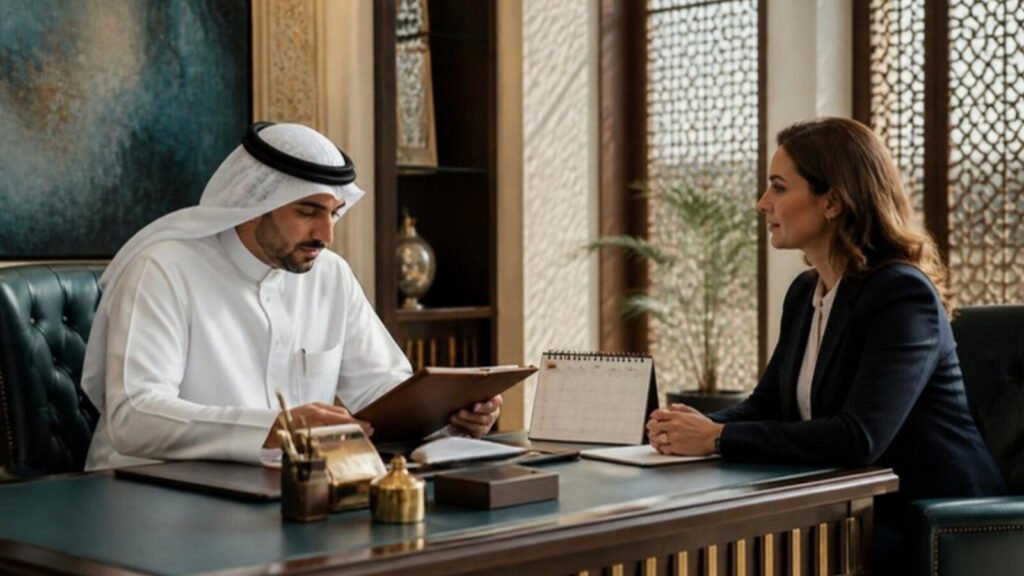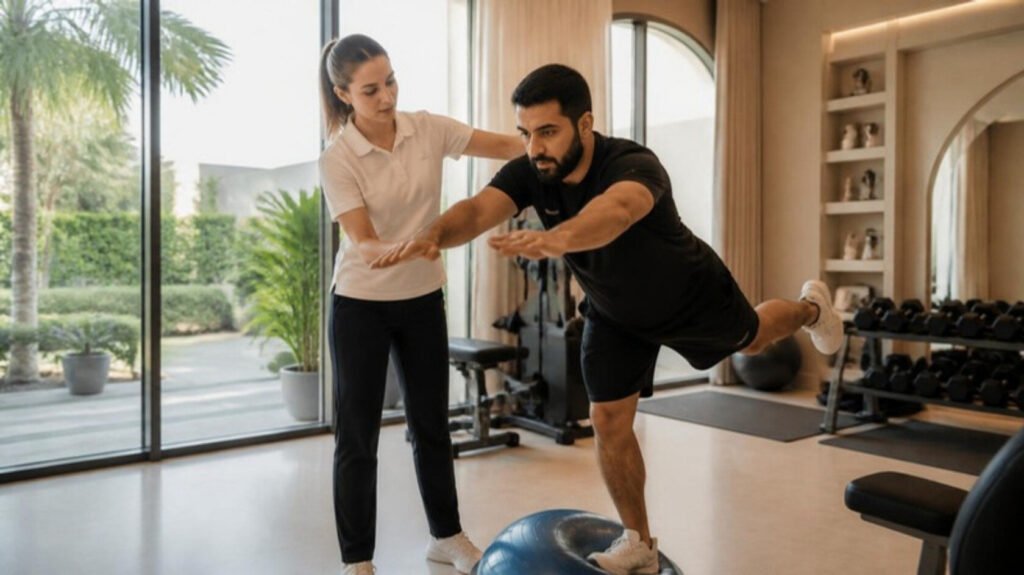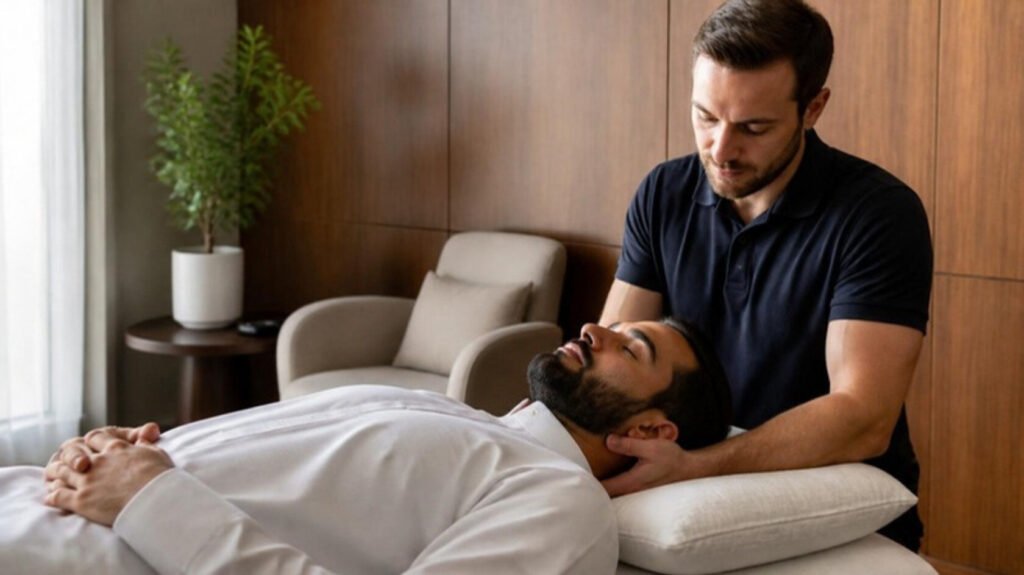
A private family briefing a musculoskeletal appointment in Riyadh or Abu Dhabi rarely opens the conversation by specifying “physiotherapist” or “osteopath.” It opens by describing a problem — chronic lower back pain that flares before long-haul travel, a shoulder that never fully recovered from an old injury, a principal who wants manual therapy built into a weekly routine rather than treated as an emergency. Which discipline answers that brief best is a clinical question, not a job-title preference, and on a growing number of the mandates I run, the answer is an osteopath.
→ Sports Physiotherapist (Manual & Movement Therapy) — Private Family, Dubai
That is why Medical Staff Talent places osteopaths under the same practice as physiotherapists — Physiotherapists & Osteopaths — rather than as a separate, standalone specialism. The same combined practice covers specialist streams such as women’s health and post-natal physiotherapy, private duty physiotherapy for private families, pain management and yacht-based physiotherapy. For a Western-Trained osteopath weighing a move against physiotherapy colleagues applying to the same mandates, understanding how households actually brief this work changes how you present yourself at interview. Our open register is here: osteopath jobs in the Gulf.
“Households don’t hire a job title. They hire whoever solves the principal’s mobility or pain problem most precisely — and for a growing share of the mandates I place, that’s an osteopath’s structural diagnosis rather than a physiotherapist’s protocol-led rehabilitation.” — Vanessa, Senior International Healthcare Recruiter, Medical Staff Talent
Why osteopathy and physiotherapy sit under one practice
Hospital recruitment keeps these two professions in separate departments because hospitals staff by protocol: a physiotherapy department runs post-surgical and injury rehabilitation pathways, and osteopathy rarely has a department at all. A household doesn’t work that way. There is one principal, one set of musculoskeletal complaints, and one appointment to get right — so the household briefs the outcome it wants (less pain, better mobility, a sustainable weekly routine) and leaves the discipline to us. Osteopathy’s structural, whole-body diagnostic approach and physiotherapy’s protocol-led rehabilitation frequently solve the same brief from different directions, which is exactly why our private family physiotherapy placements already describe manual therapy and longevity work in terms that fit an osteopath’s training just as well as a physiotherapist’s.
The osteopath profile households are asking for
- Western-Trained and currently registered with your home regulator (GOsC in the UK, or the equivalent statutory or professional register in your country of qualification).
- Comfortable working one-to-one with full clinical autonomy over assessment and treatment planning, rather than within a multidisciplinary rota.
- Experience with chronic pain management, structural and postural assessment, and ideally some exposure to performance or longevity-focused practice.
- Available to travel with the family where required, including yacht or live-in deployments during the Gulf winter or Mediterranean summer season.
- Available to start within six weeks of offer, with complete flexibility around the family’s calendar and the ability to relocate alone and travel with the family worldwide, often at short notice.
- Able to coordinate discreetly with the household’s wider clinical team — physicians, nurses and, where present, a separate performance coach.
Settings we place into
Most osteopathy mandates I run are a dedicated treatment room inside the residence, matching the model already established for our physiotherapy practice. Every appointment is permanent and live-in, and the osteopath travels continuously with the family between its residences and countries. Every setting is scoped and agreed during the confidential brief, before any candidate is presented — osteopaths are never asked to work from a public clinic list or a rotating caseload under this practice.
Package benchmarks for osteopathy placements
| Setting | Focus | Indicative package (gross, £) |
|---|---|---|
| Private family residence, one-to-one | Chronic pain, structural rehabilitation | From £60,000, depending on experience |
| Private family, routine care programme | Manual therapy, longevity-linked routine care | From £60,000, depending on experience |
| Travelling with the family | Structural and postural treatment | From £60,000, depending on experience |
Figures are indicative ranges drawn from current mandates and vary by seniority, specialism and location; they are not a quote for any specific role. The salary is agreed directly between the family and the clinician; each clinician should take advice from their own tax adviser on whether the income is taxable in their circumstances.
Verification for osteopaths
Before any introduction, we verify your registration and good standing with the GOsC or your home regulator, together with references and clinical history, at source. Medical Staff Talent introduces and verifies clinicians. The engagement is contracted directly between the family and the clinician, and all local arrangements (visa, licensed entity, coordination with local clinics) remain with the family’s own office and advisers. The service line itself — mandate, standards, package and process — is set out on our Private Osteopaths page.
Frequently asked questions
Do private family mandates specify osteopathy or physiotherapy exclusively?
Rarely. Most briefs describe the clinical outcome the household wants and leave the discipline open, which is why we place osteopaths and physiotherapists against the same mandates under one combined practice.
What professional registration should an osteopath hold before applying?
Current, unrestricted registration with your home regulator — the General Osteopathic Council in the UK, or the equivalent statutory or professional body in your country of qualification — is the baseline requirement for every mandate we run.
Does this practice pay differently to hospital-based osteopathy roles in the UK or Europe?
Packages are structured very differently: a gross salary agreed directly with the family, typically including live-in accommodation, and priced for one-to-one continuity of care rather than a clinic caseload. See the benchmarks above for current indicative ranges.
If you are a Western-Trained osteopath considering a move into private household practice, I handle these mandates personally and can talk you through what a specific brief actually involves before you commit to anything. — Vanessa, Senior International Healthcare Recruiter, Medical Staff Talent. Send us your CV in confidence.
Further reading: Physiotherapists & Osteopaths practice | Private Physiotherapist for Private Families | Longevity and Elite Performance Physiotherapy: The New Private Family Standard | All current mandates.
Clinician Guide
Placement Inside a Private Family Runs on Different Rules
Our clinician guide, Private Household Appointments, covers protocol, confidentiality and NDA standards, and how a permanent, live-in appointment with a private family works. It can be downloaded once you have sent your CV, or we can send it to you by direct message.
Send your CV for the clinician guide →Commissioning on behalf of a household? Family offices and chiefs of staff can request The Household Medical Commissioning Brief. Advisers introducing a principal: Referral & Introduction Partners.
Most requested by families now: Western-Trained sports and manual-therapy physiotherapists, with elite-athlete experience a strong advantage. Read the sports physiotherapist role brief, how elite-sport experience is weighed and what the first 90 days look like.
Send your CV in confidence