By David Vilchez, Founder & CEO, Medical Staff Talent
Most physiotherapists who consider a live-in role with a private family ask the same questions before they ask about the clinical work. Where will I sleep? Will I have my own space? Who do I answer to? When do I rest? What happens when the family travels? These are the right questions, and they deserve straight answers.
This article is written for UK & European-trained physiotherapists with a sports and manual therapy background who are weighing up a live-in physiotherapist job with a private family in Saudi Arabia, the UAE or Qatar. It walks through the first 90 days: arrival, settling into the residence, building trust with the family and the household team, protecting your rest, and the first journey abroad. Where we describe a situation, it is a hypothetical example that reflects how these appointments typically run.
Medical Staff Talent in one line: Exclusively sourcing UK & European-trained Private & Concierge Physicians, Physiotherapists & Osteopaths, and Private & Maternity Nurses for Private Families across the GCC.
Before you arrive: what to clarify in writing
The contract is agreed directly between you and the family, and the time to settle practical questions is before you sign, not in week three. Clinicians who start well usually have clear answers, in writing, on these points:
- Accommodation: a private room or apartment in, or right next to, the residence, provided free of charge. Ask whether it has its own bathroom and a door that locks.
- Who you report to: usually the chief of staff, the household manager or the family’s physician, rarely the principal directly on day-to-day matters.
- Working pattern: how sessions are usually scheduled, how days off and annual leave are agreed, and how notice of travel is given.
- Travel: flights and travel are always paid for by the family. Ask how accommodation is arranged when the family is abroad.
- Insurance: medical insurance is covered. Professional indemnity insurance is not included, so arrange your own cover before you start.
- Confidentiality: you will sign a strict NDA covering the family, the residence and your movements. Read it properly and ask what it means for social media.
For a broader look at how these posts are structured, see how families structure a permanent private physiotherapist appointment.
Weeks 1 to 2: arrival and your own space
Picture a physiotherapist landing in Riyadh on a Sunday evening. A driver from the household is waiting at the airport and goes straight to a staff apartment at the edge of the family compound: a bedroom, a small living area, a kitchenette and a private bathroom. Meals can be taken with the senior household team or prepared privately. The first two days are for rest and orientation, not treatment.
Use the first fortnight to set up the basics that will carry you through the year:
- Make your room yours. Your own space is where you recover. Unpack fully, set up a quiet corner for notes and reading, and keep your clinical kit organised so that you can travel at short notice.
- Learn the residence. Where is the gym, the treatment room, the pool, the court? Which areas are family-only? Which entrances and corridors does the household team use?
- Meet the household team. House managers, nurses, drivers, chefs, trainers and nannies all keep the home running. A short introduction to each of them now saves a lot of friction later.
- Assess before you treat. Book initial assessments with each family member on your list, agree goals and record a baseline: range, strength, balance, movement patterns, history.
Weeks 3 to 6: building trust with the family
Trust in a private household is built on two things: results the family can feel, and discretion they never have to think about.
Results come from consistency. A principal who plays padel most evenings notices quickly when his shoulder feels freer after soft tissue release and assisted stretching. An older relative notices when balance work makes the stairs easier. Keep sessions short enough to be sustainable, show progress in plain language and adjust the plan as the family’s diary changes.
Discretion is quieter. You see the family at close range, in moments that are private. You do not discuss them with other staff, you do not photograph the residence, and you do not post about your work. Families notice clinicians who are calm, punctual and unobtrusive, and they keep them for years.
Clinical autonomy matters here too. You are often the only physiotherapist in the house. Families expect you to make sound decisions, explain them clearly and coordinate with the family’s physician when something sits outside your scope. Working with the personal trainer rather than around them is part of the same skill.
Living alongside the household team
Every role is live-in and single-status: you relocate alone, and your daily life is shared with the people who run the household. That brings real advantages. There is always someone who knows how things work, where to find what you need and how the family prefers things done.
It also asks for some care. Keep professional boundaries with every member of staff, be generous with your time when someone asks for help with a sore back, and keep clinical information about the family strictly to yourself. The household manager is usually the right person to raise practical concerns with, from your accommodation to your schedule.
If you would like a frank account of the living arrangements across all clinical roles, read what live-in and single-status really involve.
Protecting your rest
The most common reason a live-in appointment goes wrong is not clinical. It is exhaustion. When you live where you work, the day can stretch without anyone meaning it to. Protect your rest deliberately:
- Agree a working pattern early and keep a simple log of sessions for the first month, so that any conversation about workload is based on facts.
- Use your days off properly. Leave the residence, see the city, keep up a sport of your own.
- Keep your professional life going. Read, take online courses and stay connected with colleagues at home. Continuing professional development is your responsibility, and it keeps you sharp in a role without a department around you.
- Plan your annual leave. These are permanent roles with annual leave. Book it in advance and go home or travel for yourself.
Weeks 7 to 12: the first journey with the family
Families in the region travel often: summer in Europe, winter breaks, business trips and sporting events. Once you are in post, you travel continuously with the family across several countries, and the programme travels with you.
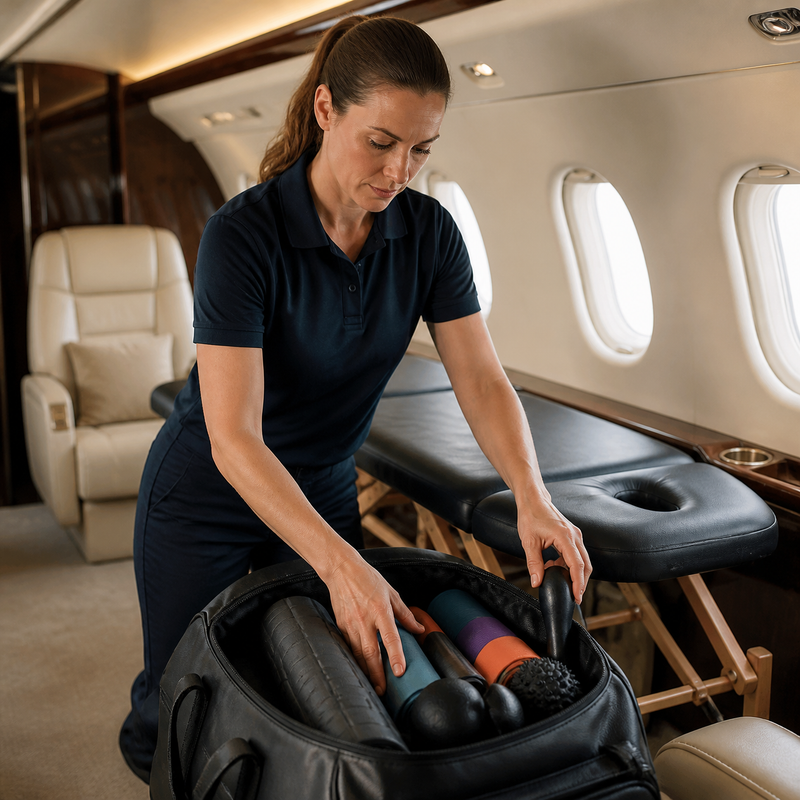
Pack a compact kit: a massage table if the family wants one at every destination, bands, a foam roller, a mobility ball and your assessment tools. Expect to work in a villa, at a golf resort, in a hotel gym or on a yacht. The work is the same; the setting changes. Keep sessions on schedule, because jet lag and long flights are exactly when a principal’s back or an older relative’s balance needs you most.
Travel is also where trust deepens. A physiotherapist who stays calm when flights change and who keeps the family moving in an unfamiliar place becomes part of how they travel.
What the first 90 days look like at a glance
| Period | Focus | Signs it is going well |
|---|---|---|
| Before arrival | Contract, accommodation, reporting line, travel, insurance, NDA | Clear written answers on every practical point |
| Weeks 1–2 | Rest, orientation, own space, initial assessments | A settled room, a known household team, baselines recorded |
| Weeks 3–6 | Consistent sessions, plain-language progress, coordination | Family members ask for their sessions, not the other way round |
| Weeks 7–12 | First journey abroad, travelling programme | Sessions continue on schedule wherever the family is |
| Throughout | Rest, boundaries, professional development | You still have energy and interests of your own |
What families require from every clinician
The conditions are the same for every appointment, and we apply them to every candidate:
- Start within about six weeks of an offer.
- Total flexibility on hours and destinations. The family’s diary sets the pattern.
- Relocate alone and travel with the family. Every role is live-in and single-status, so a partner or children do not relocate with you.
- A physiotherapy qualification obtained in the UK or Europe, with valid registration in the country where you trained. What counts is where you trained, not your nationality.
Fluent English for daily clinical work is expected. Experience with elite athletes, professional teams or high-profile clients is a strong advantage; read more in our article on moving from elite sport to a private family.
Remuneration
As a market reference, physiotherapists in private family appointments earn from £60,000 a year gross, depending on experience. Accommodation is provided free of charge, flights and travel are always paid for by the family, and medical insurance is covered; professional indemnity insurance is not included. The salary is agreed directly between the family and the clinician; each clinician should take advice from their own tax adviser on whether the income is taxable in their circumstances.
How the introduction works
Medical Staff Talent introduces and verifies clinicians. The engagement is contracted directly between the family and the clinician, and all local arrangements (visa, licensed entity, coordination with local clinics) remain with the family’s own office and advisers.
You send your CV through our confidential form. We read it personally, speak with you, verify your qualification, registration and references at source, and introduce you to a family only when a brief matches your experience, and only with your agreement. To understand the clinical side of the role, start with our guide to sports physiotherapist jobs with private families in the Gulf.
Frequently asked questions
Will I have my own accommodation?
Yes. Accommodation in, or right next to, the residence is provided free of charge. Ask before you sign whether it includes your own bathroom and a lockable door.
Do I work every day?
No. These are permanent roles with days off and annual leave. The pattern follows the family’s diary, so agree how days off are scheduled before you start.
Can my partner or children relocate with me?
No. Every role is live-in and single-status: the clinician relocates alone and lives in, or right next to, the family’s residence.
How often will I travel?
Often. Once in post, you travel continuously with the family across several countries. Flights and travel are always paid for by the family.
Who do I report to day to day?
Usually the chief of staff, the household manager or the family’s physician. Clinical decisions within your scope remain yours.
Is Medical Staff Talent my employer?
No. Medical Staff Talent introduces and verifies clinicians. The engagement is contracted directly between the family and the clinician, and all local arrangements remain with the family’s own office and advisers.
Apply in confidence
If you are a UK or European-trained physiotherapist with a sports and manual therapy background, can start within about six weeks, and are ready to relocate alone and travel with a family, we would like to hear from you. Send us your CV in confidence.
Send your CV in confidence