Cultural Adjustment for UK & European Clinicians Relocating to the Gulf: What Nobody Puts in the Offer Letter
Every offer letter covers salary, accommodation, and flights. Almost none of them cover the questions clinicians actually ask us three weeks before a move: what does the working week look like, what happens during Ramadan, and will I actually feel comfortable here day to day. This is the conversation we have with every candidate before relocation — not after.
The working week itself is the first adjustment
Across Saudi Arabia, the UAE and Qatar, the working week runs Sunday to Thursday, with Friday and Saturday as the weekend. This sounds minor until you’re three months in, still instinctively planning your Saturday around a Monday that doesn’t exist. It also affects something more practical: video calls home with family on a different rhythm, and any remaining professional obligations back home that assume a Monday-to-Friday world.
Ramadan changes the shape of the year, not just one month
For roughly a month each year, working hours shorten across the region, daytime eating and drinking in public are restricted, and the general pace of daily life slows, particularly in the afternoon. For clinicians, this has practical clinical implications too — patient scheduling patterns shift, and colleagues who are fasting may have different energy levels through the day. None of this is difficult to work with once you expect it. It is disorienting if you don’t.
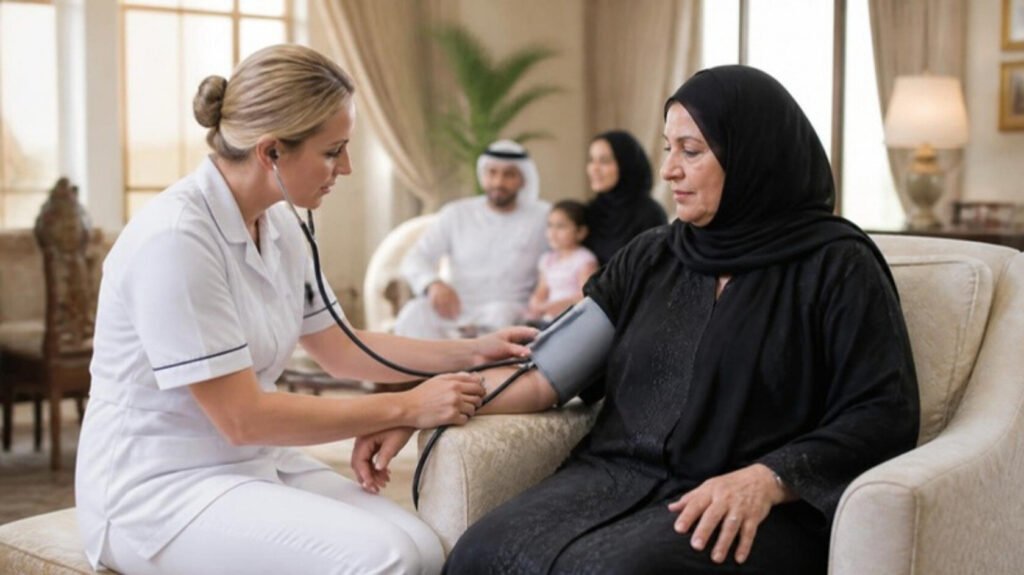
Hospitals and clinics generally handle this smoothly and explain what’s expected, but private duty and private family placements often require more personal judgement — knowing when a household observes Ramadan strictly, and adjusting your own visibility and behaviour accordingly, is part of the discretion the role demands.
Dress code and daily conduct
Professional dress in clinical settings is generally similar to UK and European norms — scrubs, clinical attire, standard hospital dress codes apply. Outside work, expectations are more conservative than many UK & European-trained clinicians initially assume, particularly in Saudi Arabia compared with Dubai or Abu Dhabi. This isn’t a restriction most clinicians find burdensome once they’ve settled in, but it is a genuine adjustment, especially for those relocating directly from a UK or European capital with no prior time in the region.
Alcohol and social life vary meaningfully by destination
This is one of the widest variations across the Gulf markets we place into. Dubai and Abu Dhabi have licensed venues and a visible expatriate social scene. Riyadh and the wider Kingdom operate under different norms entirely — alcohol is not legally available, and social life is structured differently as a result. Qatar sits between the two.
Clinicians who research one Gulf market and assume the norms transfer to another are the ones who find the first few weeks harder than they needed to be. What’s true in Dubai is often not true in Riyadh, and treating the Gulf as culturally uniform is the single most common mistake we see candidates make before they’ve even landed.
Building a social life outside the hospital or household
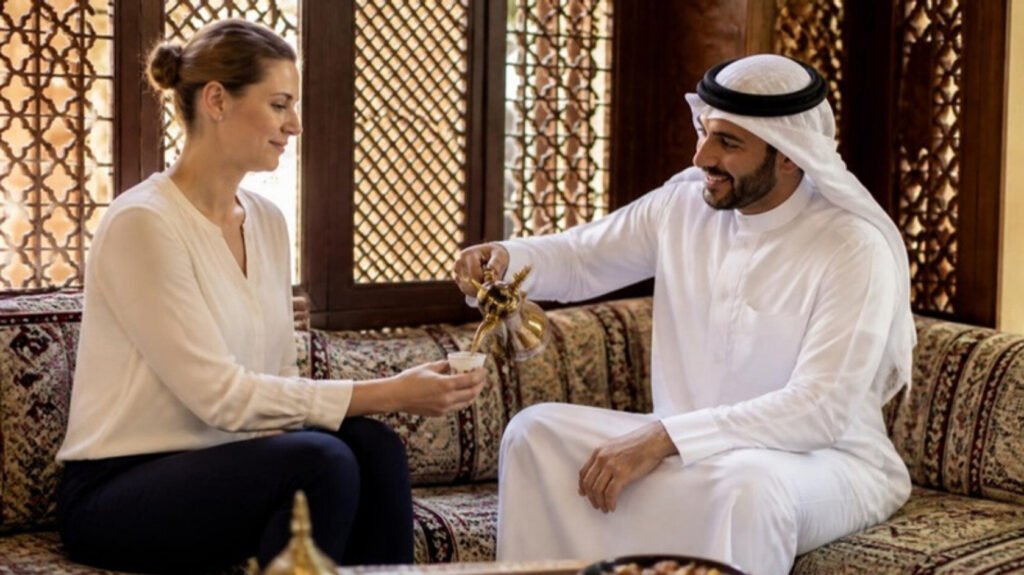
For hospital-based clinicians, colleagues are often the fastest route to a social circle — UK & European-trained staff communities are well established in Dubai, Abu Dhabi, Riyadh and Doha private hospitals, and most clinicians find their footing within a few months.
Private duty and private family placements are different. Working inside a single household, sometimes with strict confidentiality and limited visibility, means your social life has to be built more deliberately outside working hours rather than emerging naturally from a department. This is worth thinking through honestly before accepting a private duty role — it suits some clinicians and genuinely isolates others, independent of how strong the compensation package looks.
What tends to surprise clinicians in a good way
Most candidates arrive prepared for restriction and are surprised by how much everyday life is available to them — international dining, sport, beaches, and a level of everyday safety that many describe as noticeably higher than home. The adjustment is real, but it runs in both directions.
What actually helps the transition
- Speak to someone who has done the specific move, not a generic relocation guide. A UK nurse moving to Riyadh needs different preparation than a UK nurse moving to Dubai.
- Understand the country before the city. Saudi Arabia, the UAE and Qatar are not interchangeable, even though recruitment marketing sometimes treats them that way.
- Ask about the specific household or department’s norms if you’re in a private duty or private family placement. General cultural guidance only takes you so far in a residential, one-to-one role.
- Give it a full season before judging it. The adjustment period is real, and most clinicians who struggle in month one report feeling settled by month four or five.
The adjustment reads differently inside a private residence than on a hospital ward. Our Private Family & Family Office medical staffing hub explains how household appointments for private nurses, physiotherapists and physicians are structured, and current household mandates shows what is open now.
Where Medical Staff Talent fits
Compensation is only part of a relocation that works. We talk candidates through the cultural reality of their specific destination and setting before they accept — not a generic regional overview, but what to actually expect in Riyadh versus Dubai, inside a private family’s residence rather than a hospital department. Every local arrangement remains with you and the family’s own office and advisers; this is the side that determines whether you stay past year one.
If you’re weighing a move and want a candid conversation about what a specific destination and setting will actually feel like, send us your CV for a confidential conversation.
Cultural norms described are general observations and vary by specific household and individual circumstance. Last reviewed August 2026; scheduled for review February 2027.