
By David Vilchez, Founder & CEO, Medical Staff Talent
Most physiotherapists in Europe have never had to think hard about professional indemnity insurance. In a hospital, a public health service or a club, cover is often arranged through the employer, a collective agreement or membership of a professional association, and it sits quietly in the background. Move into a permanent, live-in role with a private family in Saudi Arabia, the UAE or Qatar, and that background arrangement usually no longer applies in the same way.
This article explains why professional indemnity insurance deserves your attention before you accept a private family appointment, what to look for in a policy, and which questions to put to an insurer or broker. It is written for European-trained physiotherapists with a sports and manual therapy background, particularly from the Nordic countries and Central and Eastern Europe. It is general guidance, not legal, insurance or financial advice: every situation is different, and you should take independent professional advice before you rely on any policy.
Medical Staff Talent in one line: Exclusively sourcing UK & European-trained Private & Concierge Physicians, Physiotherapists & Osteopaths, and Private & Maternity Nurses for Private Families across the GCC.
The short answer: it is not covered by the role
We prefer to say this plainly at the start. In the private family roles we introduce, the family covers private accommodation, flights and travel, and medical insurance. Professional indemnity insurance is not covered by the role, and Medical Staff Talent does not provide, arrange or recommend a policy. Arranging appropriate cover is a decision for you, taken with your own insurer, broker or adviser.
That is not a reason to be put off. It is simply part of preparing well, in the same way you would check your registration, your references and your own documents before you travel.
Why it matters more in a private household
In a private family role you are usually the only physiotherapist in the house. There is no department, no senior colleague down the corridor and no hospital risk team. A few features of the work make indemnity worth thinking about carefully:
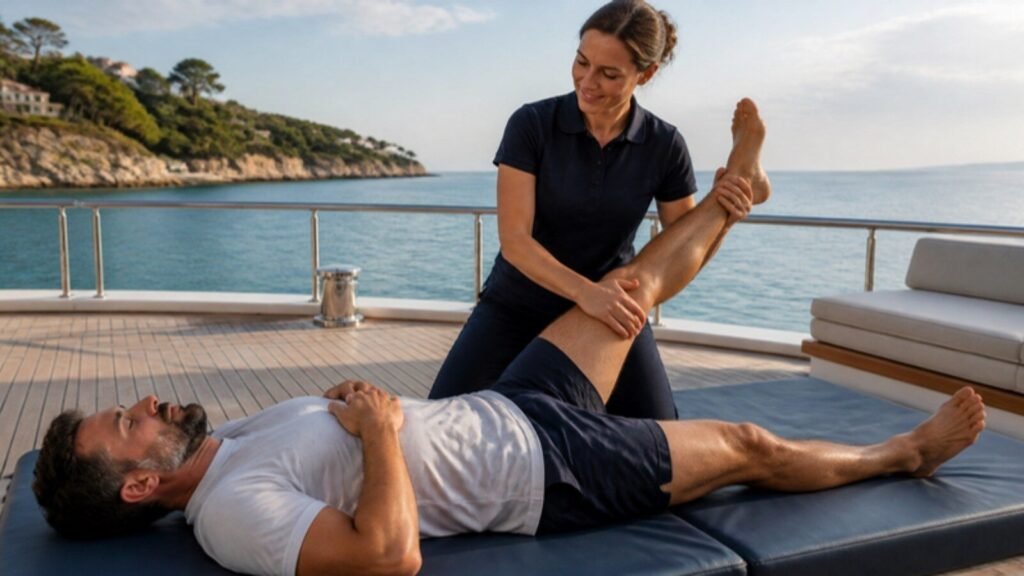
- Hands-on, high-contact work. Soft tissue release, assisted stretching, joint mobilisation and progressive loading are the core of the brief. They are safe in skilled hands, but they are also exactly the kind of interventions any indemnity policy will ask you about.
- Several patients across generations. A principal who plays padel, a teenager who trains seriously, an older relative working on balance: each has a different risk profile.
- Several countries. From day one you travel with the family. A week may start in Riyadh, continue in Geneva and end in the Alps. Where you treat someone can matter to an insurer.
- A private individual, not an institution. Many policies are written with clinics, hospitals or sports clubs in mind. Working for a private household is a different setting, and you need to know whether your policy recognises it.
What to look for in a policy
Policies differ widely, and we do not comment on the terms or prices of any particular insurer. These are the general areas that most physiotherapists find worth checking, in plain language.
1. Territorial scope
Does the policy respond to treatment delivered outside your home country? Does it cover Saudi Arabia, the UAE and Qatar, and the other countries the family is likely to travel to? Some policies are limited to one country or to Europe; others are wider. Ask the insurer to confirm the territories in writing.
2. Jurisdiction
Territory is where you work; jurisdiction is where a claim could be brought. These are not always the same thing. Ask whether the policy responds to a claim brought in a court outside your home country, and whether any countries or legal systems are excluded.
3. Setting and type of patient
Confirm that the policy covers you when you treat private individuals in their own residence, on their travels and, where relevant, on a yacht or at a private sports facility. Mention that you may treat adults, teenagers and older relatives within the same household.
4. Scope of practice
List the techniques you actually use: soft tissue release, assisted stretching, joint mobilisation, neuromuscular and movement control work, corrective exercise, breathing and core work, and balance training. If you have additional training, for example in women’s health or pelvic health, tell the insurer. Some techniques may need to be declared specifically. Never assume something is covered because it is part of your everyday practice.
5. Claims-made or occurrence basis
Some policies cover claims made while the policy is in force; others cover incidents that occurred while it was in force, whenever the claim is made. The difference matters if you change policy or return home. Ask which basis applies and what that means for you.
6. Run-off and retroactive cover
If you move from an employer’s arrangement in Europe to your own policy, ask whether earlier work is still protected, and what happens to cover for your private family work if you later stop or change policy. These questions are easy to forget and hard to fix after the event.
7. Limits, excess and legal costs
Check the limit of indemnity, any excess you would pay, and whether legal defence costs and representation in professional conduct matters with your home regulator are included. Your home registration is what families rely on, so protecting it matters.
8. Membership-based cover
Many European physiotherapy associations offer or arrange insurance for their members. If yours does, read the terms carefully: such cover is often designed for practice in the home country and may not extend to work abroad or for a private household. Ask the association directly rather than assuming.
Questions to ask your insurer or broker
It helps to put your questions in writing and keep the answers. A clear email makes it easier for the insurer to give you a precise reply. You might ask:
- Will this policy cover physiotherapy treatment I deliver to members of a private family in Saudi Arabia, the UAE and Qatar, and in the other countries we travel to?
- Does it respond to a claim brought outside my home country? Are any countries or jurisdictions excluded?
- Does it cover treatment in a private residence, during travel and at private sports facilities?
- Are all the techniques I use covered? Do any need to be declared separately?
- Is the policy written on a claims-made or occurrence basis, and what run-off cover is available if I change policy or return home?
- What is the limit of indemnity, what excess applies, and are legal costs and support in regulatory matters included?
- Does the policy require me to hold any particular registration, licence or authorisation in the country where I am working? If so, what?
- Is there anything about working for a private individual, rather than a clinic or employer, that changes the cover?
On question seven, the family’s own office and advisers handle all local arrangements, including the licensed entity. We do not give guidance on licensing, and you should not assume you may practise in any Gulf country on the strength of your European registration. If an insurer’s answer depends on local arrangements, ask the family’s office what is in place, and take independent advice.
Good practice that supports any policy
Insurance is one layer of protection. Good clinical habits are the other, and they matter just as much in a private household:
- Informed consent, every time. Explain what you propose and why, check understanding and record consent, especially for joint mobilisation or any technique with specific risks.
- Clear, discreet records. Keep concise clinical notes, stored securely and never on shared family devices. Discretion and good documentation go together.
- Work within your training. If something is outside your competence, say so and coordinate with the family’s physician.
- Screen and refer. Watch for red flags and refer promptly. In a household, the temptation to “just treat” is greater, because you are always there.
- Keep your home registration and CPD current. It is what families rely on, and many insurers expect it.
A hypothetical example
Picture a manual therapist trained in Finland, ten years in a sports clinic, considering a first private family role. Their association membership included insurance, which they had never read closely. Before accepting, they wrote to the association and to a specialist broker with the eight questions above. The association confirmed that its cover was limited to practice in Finland. The broker’s options differed on territory, jurisdiction and run-off. They took advice, chose a policy that matched their real working pattern and kept the written confirmations with their contract. When the family’s office asked about their insurance arrangements, they could answer in a single paragraph.
That is the standard to aim for: calm, documented, and decided before you travel.
Where this fits with the rest of your preparation
Indemnity is one item on a longer list. Our checklist before you accept a live-in physiotherapist role covers the others, from start date to annual leave. If you will be relocating on your own, read relocating alone to the Gulf as a physiotherapist, and for the clinical side of the role, our guide to sports physiotherapist jobs with private families in the Gulf.
What families require
- Start within about six weeks of an offer.
- Total flexibility on hours and destinations.
- Relocate alone and travel with the family: every role is live-in and single-status, so a partner or children do not relocate with you.
- A physiotherapy qualification obtained in Europe, with valid registration in the country where you trained, and fluent English.
Remuneration and what is covered
As a market reference, physiotherapists in private family appointments earn from £60,000 a year gross, depending on experience. Private accommodation is provided free of charge, flights and travel are always paid for by the family, and medical insurance is covered. Professional indemnity insurance is not included. The salary is agreed directly between the family and the clinician; each clinician should take advice from their own tax adviser on whether the income is taxable in their circumstances. These are permanent roles with annual leave, and you travel with the family from day one.
How the introduction works
Medical Staff Talent introduces and verifies clinicians. The engagement is contracted directly between the family and the clinician, and all local arrangements (visa, licensed entity, coordination with local clinics) remain with the family’s own office and advisers.
We read every CV personally, speak with you, verify your qualification, registration and references at source, and introduce you only when a brief matches your experience, and only with your agreement. We do not provide insurance, legal or tax advice. Read more on our physiotherapists page.
Frequently asked questions
Is professional indemnity insurance covered in a private family physiotherapy role?
No. The family covers private accommodation, flights and travel, and medical insurance, but professional indemnity insurance is not covered by the role. Arranging appropriate cover is your decision, taken with your own insurer, broker or adviser.
Does Medical Staff Talent provide or recommend an indemnity policy?
No. Medical Staff Talent introduces and verifies clinicians. We do not provide, arrange or recommend insurance, and we do not comment on the terms or prices of any insurer.
Will my association’s insurance cover me abroad?
It may not. Membership-based cover is often designed for practice in your home country. Ask your association in writing whether it extends to work abroad and for a private household.
What are the most important things to check in a policy?
Territorial scope, jurisdiction, the setting and type of patient, the techniques you use, claims-made or occurrence basis, run-off cover, limits, excess and legal costs.
Can I practise in the Gulf on my European registration?
You should not assume so. All local arrangements, including the licensed entity, remain with the family’s own office and advisers. Take independent advice and ask the family’s office what is in place.
Is this article insurance or legal advice?
No. It is general guidance only. Take independent professional advice before relying on any policy.
Apply in confidence
If you are a European-trained physiotherapist with a sports and manual therapy background, can start within about six weeks, and are ready to relocate alone and travel with a family, we would like to hear from you. Send us your CV in confidence.
Send your CV in confidence