By David Vilchez, Founder & CEO, Medical Staff Talent
Every physiotherapist who considers a live-in appointment with a private family in the Gulf eventually asks a question that has nothing to do with manual therapy. What will it actually be like to move there on my own? Who will I know? Will I feel safe? Will I have a door I can close at the end of the day? And when do I get to rest?
These questions matter more than any clinical detail, because the roles we introduce are permanent, live-in and single-status. You relocate alone, you live in or right next to the family’s residence, and from the first weeks you travel with the family across several countries. This article is written for European-trained physiotherapists with a sports and manual therapy background, particularly those trained in the Nordic countries and in Central and Eastern Europe, who want an honest picture of relocating alone to the Gulf before they decide.
Where we describe a situation, it is a hypothetical example that reflects how these appointments typically run, not an account of a real person or placement.
Medical Staff Talent in one line: Exclusively sourcing UK & European-trained Private & Concierge Physicians, Physiotherapists & Osteopaths, and Private & Maternity Nurses for Private Families across the GCC.
Why the move feels different when you go alone
Most international moves come with a ready-made structure: a hospital induction, a cohort of new starters, a staff residence full of colleagues in the same position. A private household is quieter. You are often the only physiotherapist in the house, and sometimes the only clinician. The people around you are the family and the household team: house managers, drivers, chefs, nannies, personal trainers, security and, in some households, a nurse or a physician.
That is not a disadvantage. Clinicians who thrive in these roles usually describe the same things: a calm private space of their own, clear expectations, a small number of people they trust, and a routine that protects their energy. The rest of this article is about building exactly that, deliberately, from day one.
Your own accommodation: what to expect and what to ask
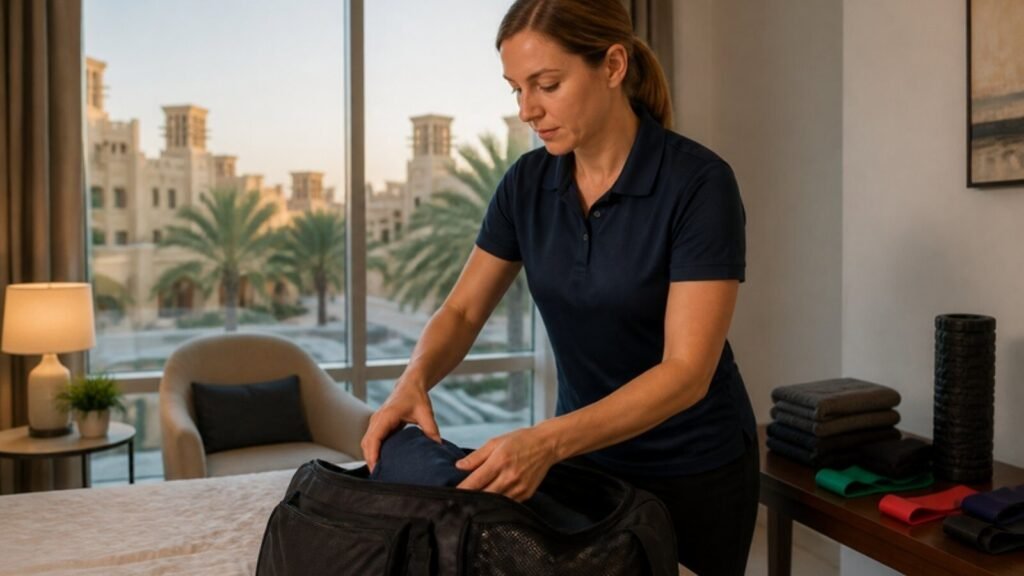
Accommodation is provided free of charge in every appointment we introduce. It is typically a private room or a self-contained staff apartment within the residence or the family compound, or right next to it. The standard varies from household to household, so the details are worth settling in writing before you accept an offer.
- Is it private? Ask whether the room or apartment is yours alone, whether it has its own bathroom, and whether the door locks from the inside.
- Where is it? Within the main residence, in a separate staff building, or in an apartment nearby. Each option has a different feel; none is better in principle, but you should know in advance.
- What about meals? Some households have a staff dining area, others provide a kitchenette. Ask how meals work on days off.
- Laundry, cleaning and internet: small details, but they shape your daily life. A reliable connection matters for calls home and for continuing professional development.
- When the family travels: ask how accommodation is arranged abroad. Usually you stay where the family stays, or very close by, in a room of your own.
For a frank account of how live-in arrangements work across all clinical roles, read what live-in and single-status really involve.
Personal safety and peace of mind
Safety is a reasonable question for anyone moving abroad alone, and it deserves a practical answer rather than reassurance. Living inside a private residence brings real advantages: controlled access, staff who know who you are, transport arranged by the household and, in many homes, a security team. Most clinicians find that their day-to-day environment is calm and well organised.
Good habits still matter, wherever you live:
- Know your point of contact. From your first day, know who to call for anything practical or personal: usually the household manager or the chief of staff. Save their number and the number of your own embassy or consulate.
- Use household transport where it is offered. Drivers are part of daily life in many Gulf households. When you go out on your own, use reputable licensed taxis or ride-hailing apps and share your plans with someone you trust.
- Keep your documents organised. Store copies of your passport, qualification certificates and registration documents securely, both digitally and on paper. The family’s own office and advisers handle all local arrangements, including the visa, but you remain responsible for keeping your personal papers in order.
- Respect local norms. Dress modestly in public places, follow the house rules on photography and visitors, and ask the household manager if you are unsure about something. Courtesy and discretion are noticed and appreciated.
- Trust your judgement. If anything about your situation does not feel right, raise it early with your point of contact. A well-run household wants to know.
Privacy inside a busy household
A private residence is a home first and a workplace second. Families value clinicians who protect their privacy, and you deserve the same in return. Privacy for you means a room that is genuinely yours, time that is genuinely off, and a clear line between your professional role and your personal life.
Picture a physiotherapist three weeks into a new appointment in Doha. They have agreed with the household manager that their apartment is off-limits to other staff unless invited, that they can be reached by phone for urgent matters in the evening but not by a knock on the door, and that their treatment room is used only for sessions. None of this is unusual. It simply had to be said out loud.
Privacy runs the other way too. You will see the family at close range. You will sign a strict confidentiality agreement covering the family, the residence and your movements. You do not post about your work, you do not photograph the home, and you do not discuss family members with other staff. That discretion is the foundation of trust, and families keep clinicians who show it for years.
Living alongside the household team
Your daily life is shared with people who run the household, often from many different countries. Most clinicians find this one of the richest parts of the role: there is always someone who knows how things work, where to find what you need and how the family likes things done.
A few principles help:
- Introduce yourself to everyone early. A short, warm introduction now saves a lot of friction later.
- Keep professional boundaries. Be friendly with everyone and close to a few. Keep clinical information about the family strictly to yourself.
- Be generous, within limits. Staff will sometimes ask about a sore back or a stiff shoulder. Helping with advice is kind; agree with the household manager whether you may treat staff, so that expectations are clear.
- Work with the personal trainer, not around them. Many households have one. Agree who leads on what, so that the family receives one coherent programme.
Protecting your rest
When you live where you work, the working day can stretch without anyone intending it to. These are permanent roles with time off and annual leave, but the family’s diary sets the pattern, and availability is part of the role. Families need clinicians who are flexible. That makes rest something you plan rather than something that simply happens.
- Agree the working pattern early and keep a short log of sessions in the first month. If the workload ever needs discussing, you will have facts rather than impressions.
- Leave the residence on days off. Walk by the sea, find a gym or a running group, visit a museum, swim. A life outside the house keeps you well.
- Keep a sport of your own. Many sports physiotherapists are athletes themselves. Training for something gives structure to your free time.
- Sleep like it is part of the job. Travel, time zones and late sessions add up. Protect your sleep the way you would advise any athlete to.
- Plan your annual leave. Book it in advance, go home or travel for yourself, and come back rested.
Our article on your first 90 days in a live-in physiotherapist job sets out how to build these habits week by week.
Staying connected with home
Relocating alone does not mean being alone. Schedule regular calls with family and friends at times that work across time zones. Join professional networks in your own country and online communities of physiotherapists working abroad. Keep up your continuing professional development: online courses, reading groups, short courses during annual leave. Clinicians who stay professionally connected tend to stay longer and enjoy the role more.
If you have a background in women’s health or pelvic health alongside sports work, you may also find our article on women’s health physiotherapist roles with private families useful.
Travelling with the family
From the first weeks, you travel with the family across several countries: summer residences in Europe, winter breaks, sporting events and business trips. Flights and travel are always paid for by the family. Travel is also where your role becomes most visible. Long flights, jet lag and unfamiliar beds are exactly when a principal’s back or an older relative’s balance needs attention.
For a sole traveller, travel adds a few practical points: keep a compact kit packed and ready, keep your documents together, know where you will sleep at each destination, and keep your point of contact informed of your movements. The family’s office handles the logistics; you handle being ready.
What families require from every clinician
- Start within about six weeks of an offer.
- Total flexibility on hours and destinations. The family’s diary sets the pattern.
- Relocate alone and travel with the family. Every role is live-in and single-status, so a partner or children do not relocate with you.
- A physiotherapy qualification obtained in Europe, with valid registration in the country where you trained. What counts is where you trained, not your nationality.
Fluent English for daily clinical work is expected. A strong manual therapy and movement background is essential: soft tissue release, assisted stretching, active mobility, joint mobilisation, neuromuscular and movement control, corrective exercise, movement analysis, injury prevention, breathing and core work, proprioception and balance. Experience with elite athletes, professional teams or high-profile clients is a strong advantage. For the clinical side of the role, start with our guide to sports physiotherapist jobs with private families in the Gulf.
Remuneration and what is covered
As a market reference, physiotherapists in private family appointments earn from £60,000 a year gross, depending on experience. Private accommodation is provided free of charge, flights and travel are always paid for by the family, and medical insurance is covered. Professional indemnity insurance is not included, so arrange your own cover before you start. The salary is agreed directly between the family and the clinician; each clinician should take advice from their own tax adviser on whether the income is taxable in their circumstances.
How the introduction works
Medical Staff Talent introduces and verifies clinicians. The engagement is contracted directly between the family and the clinician, and all local arrangements (visa, licensed entity, coordination with local clinics) remain with the family’s own office and advisers.
You send your CV through our confidential form. We read it personally, speak with you, verify your qualification, registration and references at source, and introduce you to a family only when a brief matches your experience, and only with your agreement. You can see the profile families are asking for now on our physiotherapists page.
Frequently asked questions
Will I have my own private accommodation?
Yes. Private accommodation in, or right next to, the family’s residence is provided free of charge. Ask before you accept whether it includes your own bathroom and a door that locks.
Is it safe to relocate alone to Saudi Arabia, the UAE or Qatar?
Living within a private residence usually means controlled access, transport arranged by the household and staff who know you. Sensible habits still matter: know your point of contact, use reputable transport, keep your documents organised and raise any concern early.
Can my partner or children relocate with me?
No. Every role is live-in and single-status: the clinician relocates alone and lives in, or right next to, the family’s residence.
Will I have time off?
Yes. These are permanent roles with time off and annual leave. The pattern follows the family’s diary, so agree how days off are scheduled before you start and plan your rest deliberately.
Who do I go to with a practical or personal concern?
Usually the household manager or the chief of staff. Agree from your first day who your point of contact is and how to reach them.
Is Medical Staff Talent my employer?
No. Medical Staff Talent introduces and verifies clinicians. The engagement is contracted directly between the family and the clinician, and all local arrangements remain with the family’s own office and advisers.
Apply in confidence
If you are a European-trained physiotherapist with a sports and manual therapy background, can start within about six weeks, and are ready to relocate alone and travel with a family, we would like to hear from you. Send us your CV in confidence.
Send your CV in confidence