By David Vilchez, Founder & CEO, Medical Staff Talent
→ Sports Physiotherapist (Manual & Movement Therapy) — Private Family, Dubai
A family office in Riyadh, Dubai or Doha will often begin a brief with a sentence like “we need someone for the principal’s back, neck and mobility”. Whether that person should be an osteopath or a physiotherapist is not always clear to the family, and sometimes not even to the clinicians who apply. Both professions work with their hands, both treat musculoskeletal problems, and both can build long-term programmes for one principal. Yet families do have preferences, and understanding them helps UK & European-trained manual therapists present themselves well.
This article explains how private families tend to choose between an osteopath and a physiotherapist, what each profession typically brings to a residence, and how candidates from either background can show they fit. The video below introduces the manual and sports therapy profile that families ask for when they appoint an osteopath. Physiotherapists can read more in our guide to sports physiotherapist roles with private families in the Gulf.
Two professions, one principal
In a clinic, the difference between an osteopath and a physiotherapist is often a matter of referral pathways and treatment style. In a private residence, the family is looking for one clinician who can take responsibility for a person’s movement, comfort and physical resilience over months and years. The title matters less than whether the clinician can assess well, treat effectively with their hands, prescribe sensible exercise and stay discreet, calm and consistent.
That said, families and their advisers often arrive with an impression of each profession, shaped by their own experience in London, Geneva or elsewhere. Knowing those impressions helps you speak to them.
How families tend to picture an osteopath
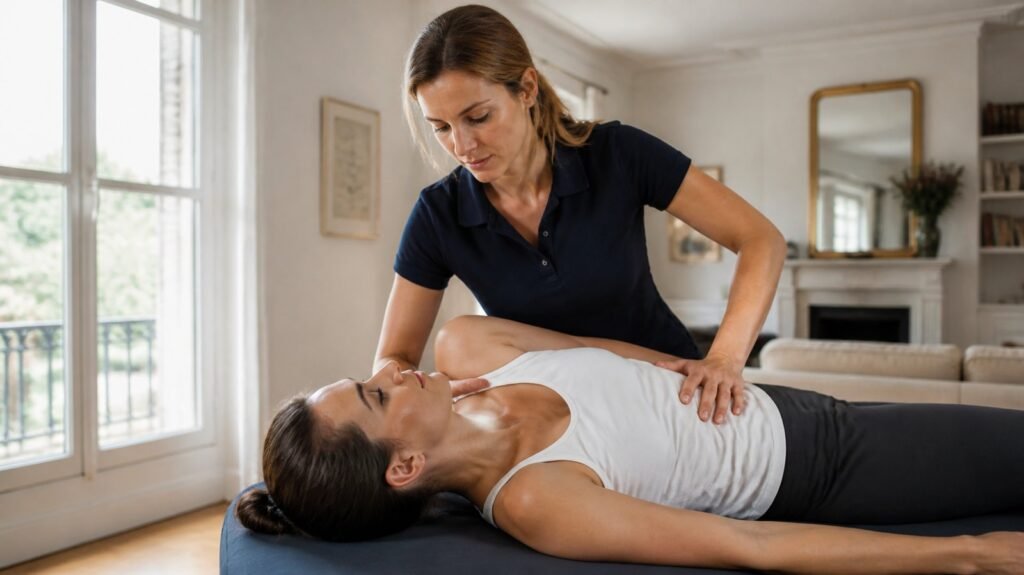
Many principals associate osteopathy with hands-on, whole-body treatment: spinal and joint techniques, soft tissue work and attention to posture and tension, often for back and neck pain, headaches linked to stress or long hours of travel, and general wellbeing. Families who have had a good experience with an osteopath abroad frequently ask for “someone like that” at home.
How families tend to picture a physiotherapist
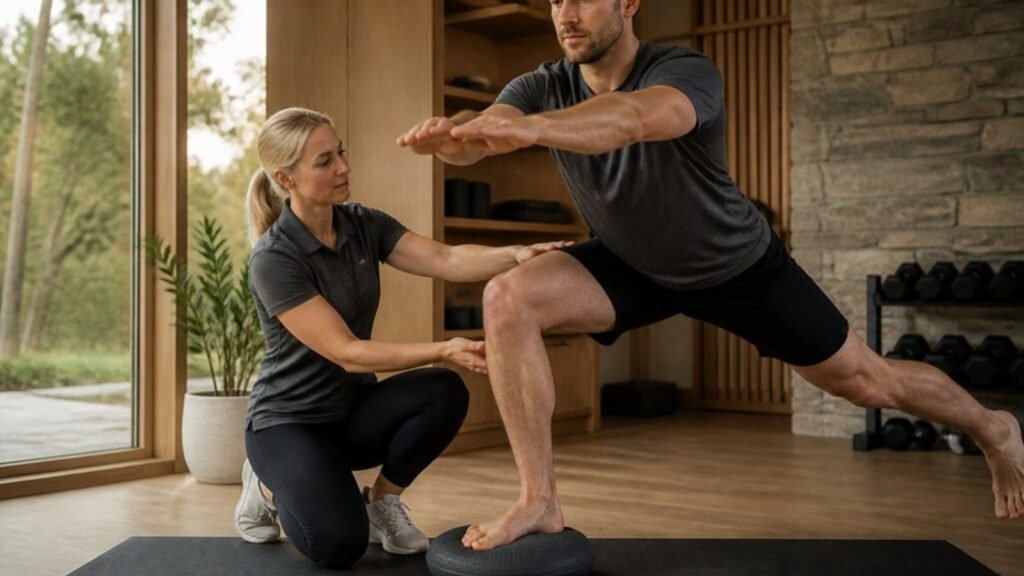
Physiotherapists are often seen as the clinicians for rehabilitation and performance: recovery after injury or surgery, sport-specific programmes, strength and conditioning, balance work for older family members and structured exercise. Families with active members who ski, ride, sail, play padel or golf often lean towards a sports physiotherapist.
What actually decides the appointment
In practice, the choice usually comes down to the needs of the person being treated and the shape of the household, rather than the profession’s name. Four questions tend to decide it.
- What is the main need? Chronic back, neck or postural complaints often point towards an osteopath or a manual therapy physiotherapist; post-operative rehabilitation or a sporting goal points towards a physiotherapist with that experience.
- How much exercise does the programme involve? If the family wants a structured exercise and conditioning plan, they will look for clear evidence of exercise prescription, whichever profession you belong to.
- Who else is in the household? A family with children who play sport, an older relative at risk of falls and a principal with back pain needs someone versatile. Breadth often matters more than a narrow speciality.
- How does the family travel? Every role is permanent, live-in and travelling with the family. Clinicians who can work with minimal equipment, on a yacht or in a hotel suite, are valued in both professions.
The overlap families value most
The profile that private families ask for most often sits in the overlap between the two professions: manual and sports therapy. That means soft tissue release, joint mobilisation, assisted stretching and active mobility work, combined with movement analysis, corrective exercise, injury prevention, breathing and core work, and proprioception and balance. Experience with elite athletes, professional teams or high-profile clients is a strong advantage, because it shows you can work with demanding people, keep confidences and deliver results under pressure.
An osteopath who prescribes exercise confidently, or a physiotherapist with advanced manual therapy skills, will often be considered for the same appointment. Our pages for osteopaths and physiotherapists describe the current profile in more detail.
How to present your profile
Whichever profession you belong to, the family’s office will read your CV quickly and look for evidence that you can take on the whole picture. A few steps make a real difference.
If you are an osteopath
- Show your exercise prescription: rehabilitation programmes, strength and mobility plans, home exercise you have designed and followed up.
- Mention any sports experience, whether with clubs, events or individual athletes.
- Describe how you work with other clinicians, such as a family physician or a specialist, to keep one clinical picture.
If you are a physiotherapist
- Make your manual therapy skills specific: name the techniques and the courses or qualifications behind them.
- Show continuity: long-term programmes you have managed for one client or one athlete.
- Highlight your sports work, especially with elite or high-profile clients, while keeping names confidential.
For both, keep the CV clear and factual, list your registration and training country, and avoid vague phrases such as “musculoskeletal assessment and treatment” without detail. Families want to see what you actually do with your hands and how you build a programme.
A hypothetical brief
Picture a family office in Doha asking for a clinician for a principal in his fifties with recurring lower back pain, who plays golf twice a week and travels most months. The family also mentions an older relative who has become unsteady on her feet. An osteopath with strong exercise prescription and balance work would fit, and so would a manual therapy physiotherapist with golf-specific experience. What decides it is who shows, in the CV and the first conversation, that they can manage all three needs calmly and consistently. This is a typical case rather than a real placement, but it is close to the briefs we see.
The package and the role
For both osteopaths and physiotherapists, the package starts from £60,000 a year gross depending on experience, with accommodation, health insurance and flights covered. Professional indemnity insurance is not covered, so you arrange your own. Every role is permanent, live-in and single-status: you relocate on your own and travel with the family between their homes and on their trips. The salary is agreed directly between the family and the clinician; each clinician should take advice from their own tax adviser on whether the income is taxable in their circumstances.
Medical Staff Talent introduces and verifies clinicians. The engagement is contracted directly between the family and the clinician, and all local arrangements (visa, licensed entity, coordination with local clinics) remain with the family’s own office and advisers.
Frequently asked questions
Do private families prefer osteopaths or physiotherapists?
Neither by default. Families choose the clinician whose skills match the person’s needs. The most requested profile is manual and sports therapy, which osteopaths and physiotherapists can both offer.
Can an osteopath apply for a role described as a physiotherapist role?
Often yes, if the brief centres on manual therapy and exercise and the osteopath can show strong exercise prescription. We discuss each brief with candidates before any introduction.
Is the package the same for both professions?
Yes: from £60,000 a year gross depending on experience, with accommodation, health insurance and flights covered. Professional indemnity insurance is not covered.
Where do these roles take place?
With private families in Saudi Arabia, the UAE and Qatar, travelling with the family to their other homes and on their trips.
How do I apply?
Send your CV through our confidential form. We review every application personally.