By David Vilchez, Founder & CEO, Medical Staff Talent
Most osteopaths picture their career in a practice: a treatment room, a diary of forty-minute appointments, patients who come and go. A small number of private families in Saudi Arabia, the UAE and Qatar offer something quite different. They want an osteopath who lives with the household, travels with it, and looks after the way every member of the family moves, every week of the year.
This article explains what that role involves for an osteopath with a manual and sports therapy profile: the daily work, how it fits alongside the family’s physiotherapist and physician, what families tend to ask for, and what the appointment offers. It is written for osteopaths trained in the UK or anywhere in Europe, from the Nordic countries to the Mediterranean. Where we describe a situation, it is a hypothetical example, not an account of a real person or placement.
Medical Staff Talent in one line: “Exclusively sourcing UK & European-trained Private & Concierge Physicians, Physiotherapists & Osteopaths, and Private & Maternity Nurses for Private Families across the GCC.”
Why a private family would want an osteopath in the residence
An active household generates a steady stream of musculoskeletal questions. A principal who plays padel three times a week. A teenager who rides. A parent who spends long hours on flights between several countries and arrives stiff and tired. None of this needs a hospital, and very little of it fits neatly into a clinic appointment in whichever city the family happens to be in that week.
An osteopath in the residence solves that problem. Treatment happens when it is needed, not when a diary allows. The same clinician sees the same people over months, so small changes in posture, mobility or loading are noticed early. And because the family travels, continuity of care travels with it.
Families also value discretion. An in-house clinician means fewer outside appointments, fewer new faces, and a strict NDA that covers everything seen and heard in the household.
The profile families ask for: manual and sports therapy
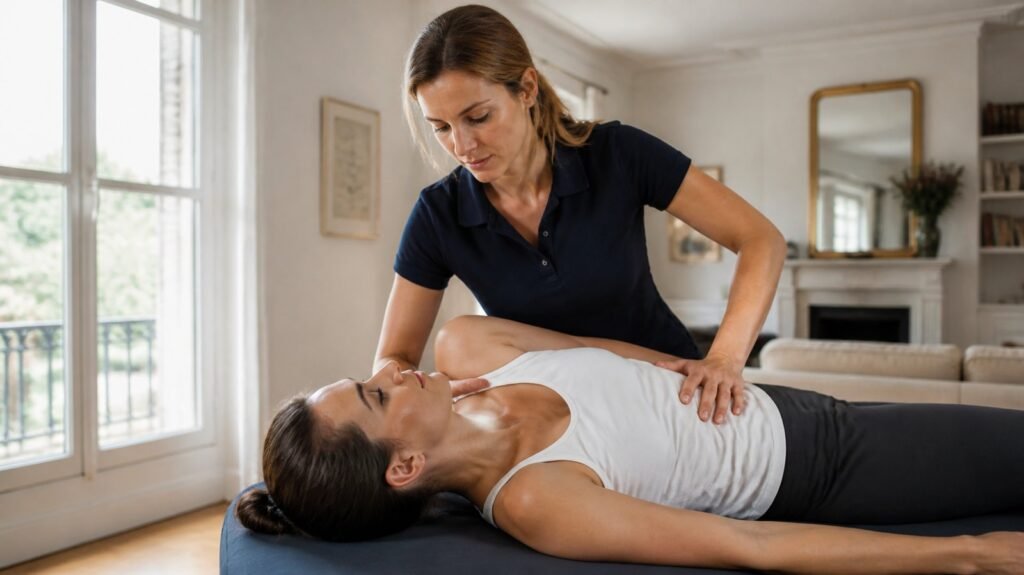
The osteopaths who fit these roles best combine classic osteopathic assessment with a hands-on, movement-based approach close to sports therapy. In practice, briefs tend to mention the same areas again and again:
- Osteopathic assessment and treatment of musculoskeletal complaints across the family.
- Soft tissue release, assisted stretching and joint mobilisation.
- Active mobility work and neuromuscular techniques for movement control.
- Corrective exercise built on movement analysis and biomechanical assessment.
- Injury prevention, breathing and core control, proprioception and balance.
Experience supporting elite athletes, professional teams or high-profile clients is a strong advantage. It shows that you can work to a high standard under scrutiny, adapt a plan to a demanding schedule, and keep your composure around people who are used to the best.
Strength and conditioning plays a smaller part. The emphasis is on manual therapy, mobility and movement control, delivered calmly and consistently.
Osteopath and physiotherapist: how the two roles fit together
Many of these households already have a physiotherapist, or are recruiting one at the same time. The two roles are complementary, not competing. In a typical arrangement the physiotherapist leads on structured rehabilitation and exercise programmes, while the osteopath brings a whole-body, hands-on perspective to recurring complaints, stiffness and recovery from travel and sport. Both share cases with the family’s physician.
What matters is clear communication. Families notice quickly when their clinicians agree on a plan and speak with one voice. They also notice when someone works within their scope of practice and knows when to refer. Sound clinical reasoning, and the humility to involve the physician when something does not look musculoskeletal, are part of the job.
For a closer look at how physiotherapy works inside these households, see our guide to sports physiotherapist roles with private families in the Gulf and our article on padel, tennis, golf and riding, which applies equally to osteopaths with a sports background.
A hypothetical week
Picture an osteopath with a manual and sports therapy background, recently appointed to a family based in Riyadh. The week starts with a short assessment session for the principal before a morning padel match: hips, thoracic mobility and shoulders, followed by a few minutes of activation work. Later, a session for a family member whose neck has tightened after a long-haul flight.
Midweek, the household prepares to travel. The osteopath reviews who will need what over the following days, packs a portable treatment table and the essentials, and agrees with the family’s physiotherapist who will cover which sessions. On arrival in another country, the routine continues in a different residence, with the same people and the same plan.
Towards the end of the week there is time for notes, a call with the family’s physician about one case, and a quiet afternoon off. The pace is steady rather than frantic, but the osteopath has to be ready to adapt when the family’s plans change at short notice.
What the appointment offers
- From £60,000 a year gross, depending on experience.
- Free private accommodation; flights and travel are always paid for by the family.
- Medical insurance is covered; professional indemnity insurance is not included.
- A permanent, live-in appointment with annual leave.
- Once in post, you travel continuously with the family across several countries.
The salary is agreed directly between the family and the clinician; each clinician should take advice from their own tax adviser on whether the income is taxable in their circumstances.
Because indemnity cover is not included, it is worth understanding your options before you accept. Our article on professional indemnity insurance for clinicians working with a private family abroad sets out the questions to ask.
Live-in and single-status: what that means
Every role is live-in and single-status. You relocate alone, with total flexibility to travel with the family. Partners and children do not relocate with you. For many osteopaths this is the biggest decision of all, and it deserves honest thought.
In return, you have your own private accommodation in or right next to the residence, a clear separation between working time and rest, and a household staff team around you. If you are weighing this up, our articles on relocating alone: safety, privacy and rest and the checklist before you accept a live-in role were written with physiotherapists in mind, but almost everything in them applies to osteopaths too.
Requirements
- An osteopathy qualification from the UK or Europe, with current registration in the country where you trained. What counts is where you trained, not your nationality.
- Substantial hands-on experience in manual therapy and movement-based treatment, ideally in sport.
- Sound clinical reasoning and knowing when to refer.
- Fluent English and a calm, courteous manner.
- Able to start within about six weeks.
How the introduction works
Medical Staff Talent introduces and verifies clinicians. The engagement is contracted directly between the family and the clinician, and all local arrangements (visa, licensed entity, coordination with local clinics) remain with the family’s own office and advisers.
In practice, we review your CV in confidence, speak with you about your experience and what you are looking for, verify your qualifications and references, and introduce you to a family only when there is a genuine match. The family is never identified until mutual interest is established. Your first weeks in post matter a great deal; our article on the first 90 days in a live-in role describes how to settle in well.
You can read the current osteopath vacancy on our osteopath job listing, and more about our work with osteopaths on our osteopaths page.
Frequently asked questions
Do I need a sports background to apply?
A manual and sports therapy profile is what families ask for most. Experience with elite athletes, professional teams or high-profile clients is a strong advantage, but solid hands-on experience in movement-based treatment matters most.
Will I work alongside a physiotherapist?
Often, yes. The osteopath and the physiotherapist share cases with the family’s physician, each within their own scope of practice.
Is this a temporary contract?
No. It is a permanent, live-in appointment with annual leave.
How much travel is involved?
Once in post, you travel continuously with the family across several countries. Flights and travel are always paid for by the family.
Can my partner or children come with me?
No. Every role is live-in and single-status, so partners and children do not relocate with you.
How do I apply?
Send your CV in English through our confidential online form. Please do not send it as an email attachment.
Apply in confidence
If you are an osteopath trained in the UK or Europe, with a manual and sports therapy background, able to start within about six weeks and ready to relocate alone and travel with a family, we would like to hear from you. Send us your CV in confidence.
Send your CV in confidence